
Understanding the Challenge of Complex Papers
Diving into complex academic papers can feel like navigating a labyrinth of information. Researchers and students often encounter several challenges when analyzing these papers, which can significantly impact research efficiency.
Common struggles in paper analysis include:
Overwhelming amount of data
Intricate web of technical jargon
Specialized terminology
Complex methodologies
Sophisticated statistical analyses
These factors can lead to frustration, especially when facing deadlines or trying to stay current in your field. The impact on research efficiency is notable, as it can slow down progress, hamper productivity, and limit the depth and breadth of research insights.
Effective Strategies for Paper Breakdown

Preliminary Skimming Techniques
Before diving deep into a complex paper, employ these effective preliminary skimming techniques:
Focus on the abstract, introduction, and conclusion
Identify key sections and subheadings
Scan for main arguments and research questions
Look for relevant methodology and results sections
This approach provides a roadmap for detailed reading and helps decide if the paper is worth an in-depth review.
Active Reading Approaches
Active reading is essential for engaging with and understanding complex materials. Transform passive reading into an interactive process by using strategic note-taking, highlighting and annotating, critical engagement, and developing a personal system. These techniques enhance comprehension and retention.
Leveraging AI for Efficient Paper Analysis

AI has revolutionized the approach to complex academic papers, offering several advantages such as rapid extraction of key concepts, automated summarization, visual representation of complex information, time-saving in research processes, and enhanced ability to comprehend sophisticated academic content.
Ponder stands out among AI-powered research tools with its transformative features:
Feature | Benefit |
|---|---|
One-click PDF upload | Instant conversion to interactive knowledge map |
AI-assisted identification | Intelligent interpretation and organization of core ideas |
Visual representation | Bird's-eye view of paper structure and connections |
Organizing and Visualizing Paper Content
Creating Effective Knowledge Structures
Effective knowledge structures are crucial for managing complex papers. mind mapping techniques and hierarchical organization of concepts help in organizing information and understanding relationships between different ideas. Place the main topic at the center, branch out to key concepts, and use colors or shapes to categorize information.
Utilizing Digital Tools for Visual Representation
Digital tools offer powerful ways to visually represent complex paper content. Ponder's flexible knowledge organization features, interactive visual representations, color-coding, and zoom capabilities leverage spatial thinking, enhancing comprehension and retention of complex academic knowledge.
Synthesizing Insights Across Multiple Papers
Comparative Analysis Techniques
Comparative analysis is key to synthesizing insights from multiple papers. Create comparison matrices to systematically compare key aspects, identify trends and gaps in research, look for recurring themes or methodologies, and spot areas where research is sparse or conflicting. This structured approach helps in developing a comprehensive understanding of the field and identifying future research directions.
Building a Comprehensive Research Framework
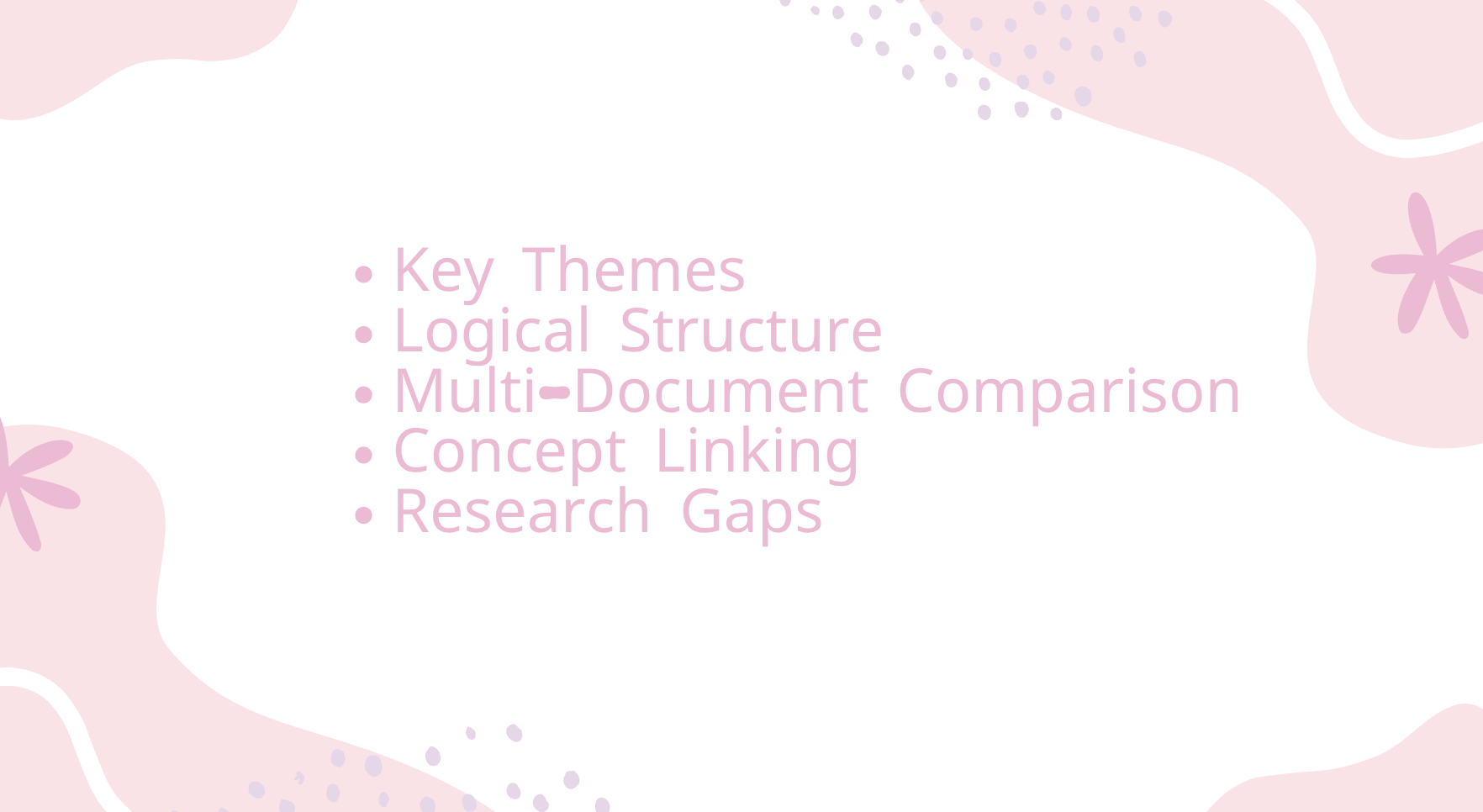
Building a comprehensive research framework integrates insights from various sources. The process involves:
Identifying key themes across analyzed papers
Organizing themes into a logical structure
Using Ponder's multi-document comparison feature
Creating links between similar concepts across papers
Highlighting discrepancies and areas needing further research
This process creates a dynamic, interactive map of your field of study, leading to new insights and well-grounded research directions.
By following these strategies and leveraging tools like Ponder, researchers can effectively break down complex papers, synthesize information across multiple sources, and build a solid foundation for their own work. The combination of AI-powered analysis, visual representation, and structured comparative techniques empowers researchers to navigate the complexities of academic literature with greater efficiency and insight.