
The Time Crunch Challenge in Modern Education
Balancing Academic Demands and Personal Life
In today's fast-paced educational landscape, students face an unprecedented challenge: the constant juggling act between academic excellence and personal well-being. The pressure to maintain top grades, participate in extracurricular activities, and build a competitive resume has never been more intense. This relentless pursuit of academic success often comes at the cost of personal time, hobbies, and even sleep.
Experiencing firsthand the struggle of trying to fit everything into a 24-hour day is common for students. Classrooms full of bleary-eyed learners, running on caffeine and determination, are a frequent sight. However, this approach is unsustainable and can lead to burnout. The key lies in finding a balance that allows for academic growth without sacrificing mental and physical health.
The Myth of Long Study Hours Equals Better Results
The stories of successful students pulling all-nighters and spending countless hours in the library are well-known. But here's a surprising truth: more study time doesn't always translate to better results. Research has shown that there's a point of diminishing returns when it comes to study duration.
A study published in the Journal of Educational Psychology found that after a certain point, additional study time had little to no impact on academic performance. This challenges the common belief that the key to success is simply putting in more hours. Instead, it highlights the importance of quality over quantity in learning.
Smart Study Techniques for Maximizing Efficiency
The Pomodoro Technique: Focused Bursts of Productivity
The Pomodoro Technique is a time management method that has revolutionized the way many students approach their studies. Named after the tomato-shaped kitchen timer its creator used, this technique involves:
Working in focused 25-minute intervals
Taking short 5-minute breaks between intervals
Taking a longer 15-30 minute break after four "pomodoros"
Repeating the cycle as needed
This method works wonders for several reasons. It breaks your work into manageable chunks, creates a sense of urgency, and prevents mental fatigue through regular breaks.
Active Recall: Supercharging Your Memory
Active recall is a powerful learning technique that involves actively stimulating your memory during the learning process. Instead of passively reading or highlighting text, active recall requires you to retrieve information from your memory. This could involve:
Testing yourself with flashcards
Explaining concepts out loud
Creating your own questions about the material
Teaching concepts to others (even imaginary audiences)
The effectiveness of active recall lies in its ability to strengthen neural pathways in your brain, making it easier to retrieve information later.
Leveraging Technology for Streamlined Learning

AI-Powered Study Tools: A Game Changer
Artificial Intelligence (AI) is revolutionizing the way we approach education and study. AI-powered study tools like Ponder are designed to analyze vast amounts of information quickly, provide personalized learning experiences, and offer insights that might take humans much longer to derive.
Digital Note-Taking and Organization Strategies
Digital note-taking has emerged as a powerful tool for modern students, offering flexibility, searchability, and the ability to integrate multimedia elements into your notes. Popular apps like Evernote, OneNote, and Notion have made it easier than ever to capture, organize, and retrieve information.
The Power of Visual Learning in Reducing Study Time
Mind Mapping: Connecting Ideas Visually
Mind mapping is a powerful visual technique that can significantly reduce the time it takes to understand and remember complex information. By representing ideas and their relationships in a visual, non-linear format, mind maps tap into the brain's natural ability to process visual information quickly and efficiently.
Infographics and Data Visualization
Infographics and data visualizations condense large amounts of information into easily digestible visual formats. They use a combination of images, charts, and minimal text to convey information quickly and clearly, making it easier to spot trends, patterns, and relationships.
Collaborative Learning: Multiplying Knowledge Acquisition

Peer Study Groups: Sharing the Cognitive Load
Peer study groups are a powerful tool for accelerating learning and reducing individual study time. By working together, students can share the cognitive load of processing and understanding complex information. Effective group study sessions can take many forms, such as dividing up topics and teaching each other, working through problem sets together, discussing different approaches to challenges, and creating shared knowledge bases.
Expert Insights: Tapping into Collective Wisdom
While peer learning is valuable, there's also immense benefit in tapping into the knowledge of subject matter experts. Experts can provide insights, context, and connections that might take students years to discover on their own. Technology has dramatically expanded our ability to access expert insights through online courses, webinars, and expert forums.
Study Technique | Description | Benefits |
|---|---|---|
Pomodoro Technique | 25-minute focused work sessions with breaks | Improves focus, reduces burnout |
Active Recall | Testing yourself on material | Enhances long-term retention |
AI-Powered Tools | Using AI for research and study | Faster information processing |
Digital Note-Taking | Using apps for notes and organization | Better organization, easy searchability |
Mind Mapping | Visual representation of ideas | Improves understanding of concepts |
Infographics | Visual summaries of complex information | Faster comprehension of data |
Peer Study Groups | Collaborative learning with classmates | Shares cognitive load |
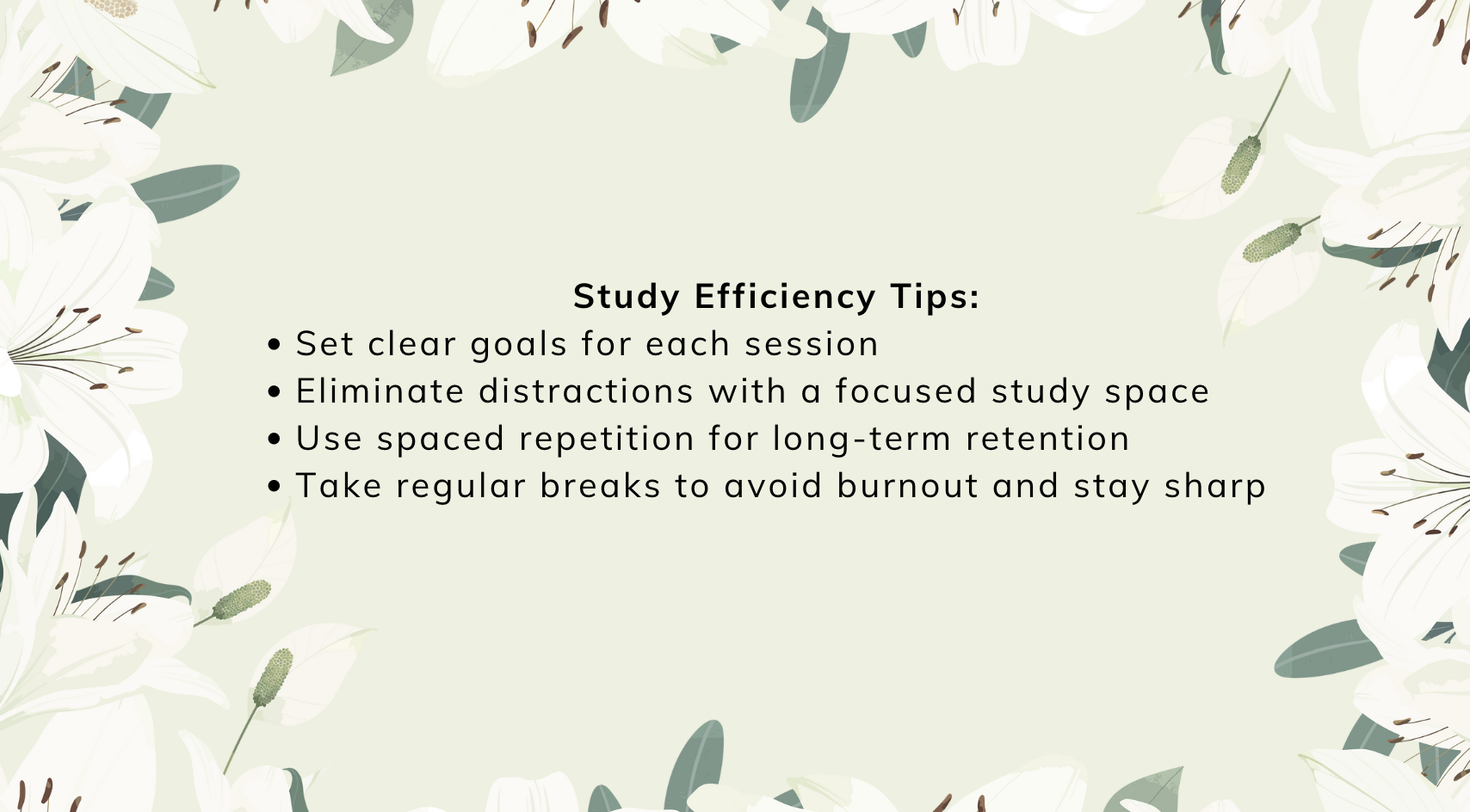
To maximize your study efficiency, consider implementing these key strategies:
Set clear, achievable goals for each study session
Eliminate distractions by creating a dedicated study environment
Use spaced repetition to review material over time
Take regular breaks to maintain focus and prevent burnout
By adopting these methods and continuously refining your approach, you'll find that you can accomplish more in your studies while reclaiming valuable time for other aspects of your life. The key is to work smarter, not harder, and to leverage the tools and techniques available to modern students.