
The Evolution of Collaborative Research in the Digital Age
Traditional Challenges in Team-Based Research
Collaborative research has long been a cornerstone of academic and professional advancement, but it hasn't always been smooth sailing. In the past, coordinating efforts across multiple researchers often felt like herding cats. You'd have team members working in silos, struggling to keep everyone on the same page. I remember the frustration of version control nightmares, where conflicting document edits would lead to hours of painstaking reconciliation.
Inefficiencies in sharing and updating information in real-time were another major headache. Picture this: you've just made a breakthrough, but your colleague across the country won't see it until tomorrow's email check. This lag in communication could lead to duplicate work or missed opportunities for synergy. The result? A collaborative process that was often more draining than inspiring, leaving many researchers longing for a more streamlined approach.
The Rise of Digital Collaboration Tools
As the digital age dawned, a glimmer of hope appeared on the horizon in the form of early digital collaboration platforms. These pioneers introduced the concept of shared online workspaces, where documents could be accessed and edited by multiple users simultaneously. It was a game-changer, allowing researchers to break free from the constraints of physical proximity and time zones.
However, these first-generation research management software solutions had their limitations. While they solved some problems, they often created new ones. Many were clunky and unintuitive, requiring a steep learning curve that could deter less tech-savvy team members. Others lacked robust features for academic research, forcing users to cobble together multiple tools to meet their needs. The dream of truly seamless collaboration remained just out of reach, setting the stage for the next wave of innovation in research technology.
Essential Elements of Effective Multi-User Research Collaboration
Building a Shared Knowledge Base
At the heart of successful multi-user research collaboration lies a robust shared knowledge base. Think of it as the collective brain of your research team – a centralized repository where all your findings, theories, and data converge. This digital hub is crucial for ensuring that every team member has access to the latest information, reducing redundancy and fostering a truly collaborative environment.
Creating an effective shared knowledge base isn't just about dumping information into a shared folder. It requires thoughtful organization and categorization of collective research findings. Here's where tools like Ponder shine, offering AI-powered systems that can automatically categorize and link related pieces of information. By implementing smart tagging systems and hierarchical structures, you can ensure that your team's knowledge is not just stored, but readily accessible and easy to navigate. Remember, the goal is to create a living, breathing ecosystem of information that grows and evolves with your research project.
Establishing Clear Communication Channels
Clear communication is the lifeblood of any collaborative research project. In the digital age, we're spoiled for choice when it comes to tools for seamless information exchange. From instant messaging platforms to video conferencing software, the options are endless. But here's the catch – it's not about using every tool available, but rather choosing the right mix that suits your team's workflow.
When setting up communication channels, consider creating dedicated spaces for different types of interactions. For example, you might use a platform like Slack for quick daily updates and informal brainstorming, while reserving video calls for in-depth discussions and presentations. The key is to establish a clear protocol for which channels to use for what purpose, ensuring that important information doesn't get lost in the noise.
Best practices for maintaining transparency in collaborative projects include:
Regular check-ins: Schedule brief team meetings to align goals and address any roadblocks.
Clear documentation: Encourage team members to document decisions and key findings in a shared space.
Open feedback loops: Create a culture where team members feel comfortable sharing ideas and constructive criticism.
By fostering an environment of open communication, you'll not only improve the flow of information but also build stronger relationships within your research team.
Leveraging AI for Enhanced Collaborative Research
AI-Powered Document Analysis and Insights
Artificial Intelligence is revolutionizing the way we approach collaborative research, particularly when it comes to document analysis and generating insights. Gone are the days of spending weeks sifting through mountains of academic papers. AI can now process and analyze vast amounts of text in a fraction of the time it would take a human researcher.
One of the most exciting developments in this area is Ponder's innovative feature: AI-generated knowledge maps for rapid comprehension. These visual representations of complex information allow researchers to quickly grasp key concepts and relationships within a body of literature. Imagine being able to see, at a glance, how different theories connect or how research has evolved over time. This not only accelerates the literature review process but also sparks new ideas and connections that might have been missed through traditional methods.
Here's a breakdown of how AI enhances document analysis in collaborative research:
Feature | Description | Benefit |
|---|---|---|
Automated Summarization | AI generates concise summaries of lengthy documents | Saves time and improves understanding of key points |
Semantic Search | Advanced algorithms find relevant information based on context, not just keywords | Uncovers valuable insights that might be missed by traditional search methods |
Citation Network Analysis | AI maps relationships between papers based on citations | Identifies influential works and research trends |
Intelligent Task Allocation and Progress Tracking
AI doesn't just help with analyzing documents; it's also transforming how we manage and track collaborative research projects. Intelligent algorithms can now assist in optimal task distribution among team members, taking into account individual strengths, workload, and project deadlines. This ensures that each researcher is working on tasks that best suit their expertise, maximizing productivity and job satisfaction.
Ponder's smart progress monitoring and deadline management capabilities take this a step further. The platform uses AI to analyze work patterns, identify potential bottlenecks, and suggest adjustments to keep the project on track. It's like having a virtual project manager that never sleeps, constantly looking for ways to optimize your team's workflow.
I've found that one of the most valuable aspects of these AI-driven tools is their ability to provide real-time insights into project progress. With just a few clicks, you can generate reports that show which areas of the research are advancing smoothly and where additional resources might be needed. This level of visibility allows for proactive management, ensuring that your collaborative research project stays on course and meets its objectives.
Optimizing Workflow in Multi-User Research Projects
Streamlining the Research Process with Integrated Tools
In the world of multi-user research, the saying "the whole is greater than the sum of its parts" couldn't be more true. This is especially relevant when we talk about streamlining the research process with integrated tools. All-in-one research platforms have emerged as game-changers, offering a unified workspace where every aspect of the research journey can unfold seamlessly.
The benefits of these integrated platforms are manifold. First, they eliminate the need to juggle multiple software applications, each with its own learning curve and compatibility issues. Instead, researchers can move fluidly from literature review to data analysis to manuscript writing, all within a single environment. This continuity not only saves time but also reduces the cognitive load associated with context switching.
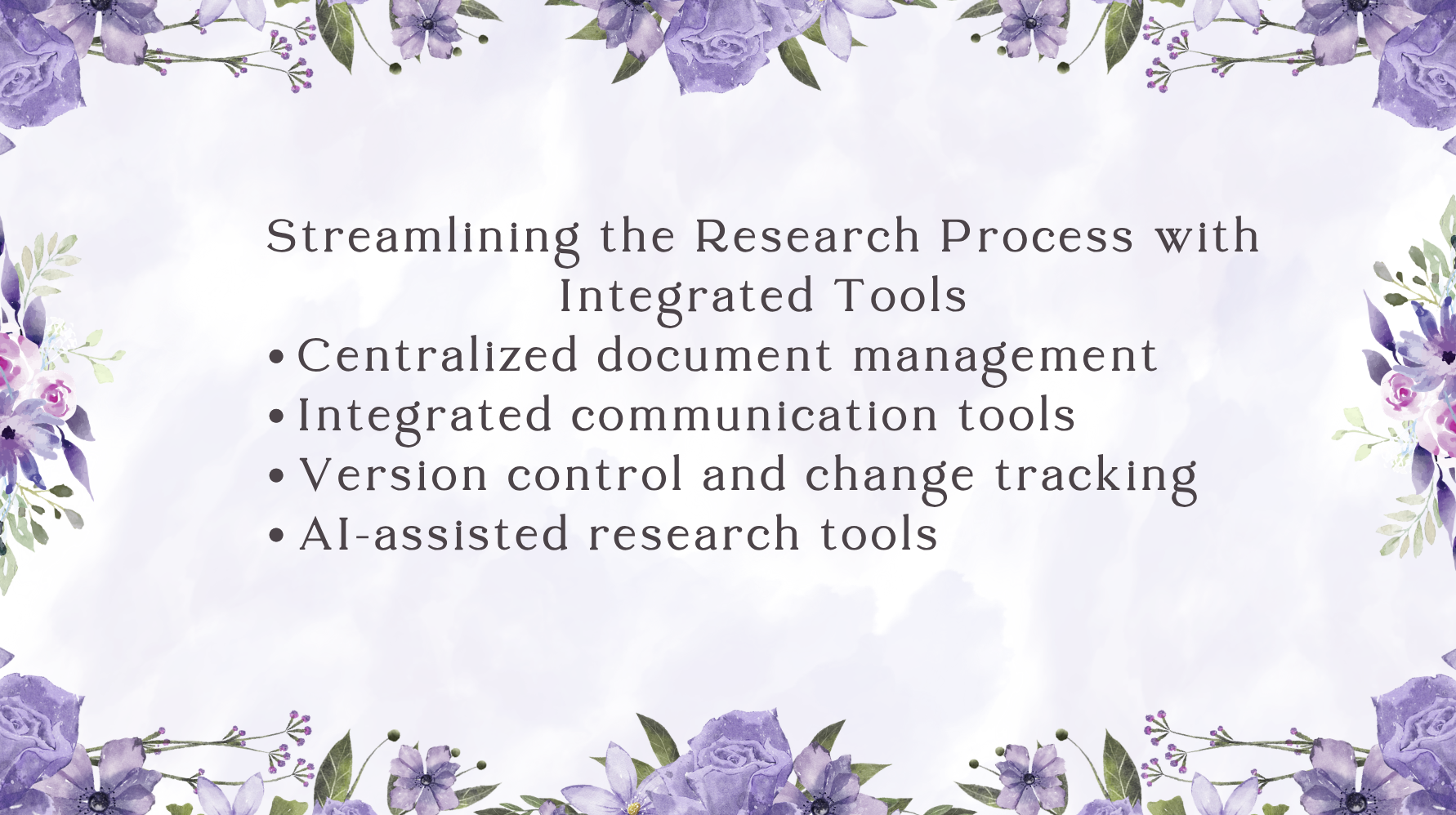
Ponder's unified workspace takes this concept to the next level, providing a seamless collaboration experience across all research stages. Here's what makes it stand out:
Centralized document management: All your papers, notes, and drafts in one place, accessible to the entire team.
Integrated communication tools: Chat, comment, and discuss directly within the context of your research materials.
Version control and change tracking: Never lose an important edit or struggle to merge conflicting versions again.
AI-assisted research tools: From literature recommendations to automated citations, AI is there to support every step of your research process.
By adopting such an integrated approach, research teams can focus more on generating insights and less on managing the logistics of collaboration.
Fostering Real-Time Collaboration and Idea Exchange
The magic of collaborative research often happens in those spontaneous moments of shared insight. But how do you recreate that spark in a digital environment? The key lies in fostering real-time collaboration and idea exchange. It's about creating a virtual space where thoughts can flow freely, and ideas can be captured and built upon in the moment.
One effective technique for encouraging spontaneous brainstorming and knowledge sharing is to establish regular "open thinking" sessions. These are unstructured meetings where team members can bring up any ideas or challenges they're grappling with. The goal isn't to solve everything on the spot, but to create an environment where creative thinking is encouraged and diverse perspectives are valued.
Ponder's interactive digital canvas takes this concept to new heights, offering a collaborative mind mapping and idea development platform. Imagine a virtual whiteboard where multiple researchers can simultaneously sketch out concepts, drag and drop relevant research snippets, and visualize connections between ideas. This tool doesn't just facilitate collaboration; it actively encourages it by making the process of sharing and building on ideas intuitive and engaging.
I've found that these real-time collaboration tools can lead to some of the most exciting breakthroughs in a research project. They allow for the kind of rapid iteration and cross-pollination of ideas that can turn a good research project into a great one. By embracing these technologies and techniques, you're not just optimizing your workflow – you're creating an environment where innovation can thrive.
Measuring Success in Collaborative Research Endeavors
Key Performance Indicators for Research Collaboration
Measuring the success of collaborative research projects goes beyond just counting publications or citations. In the digital age, we have access to a wealth of data that can provide deeper insights into the efficiency and effectiveness of our collaborative efforts. Key Performance Indicators (KPIs) for research collaboration should encompass both quantitative and qualitative metrics to give a holistic view of project success.
Some essential KPIs to consider include:
Productivity metrics: Number of tasks completed, milestones reached, or documents produced within a given timeframe.
Engagement levels: Frequency and quality of interactions between team members on collaborative platforms.
Knowledge sharing efficiency: How quickly and effectively information is disseminated across the team.
Innovation index: Number of new ideas generated and successfully implemented during the project.
Ponder's analytics tools provide valuable insights into team productivity and research impact. The platform can track how often shared resources are accessed, which team members are contributing most actively, and even identify patterns in successful collaboration. These data-driven insights allow project leaders to make informed decisions about resource allocation and team dynamics, ultimately leading to more successful research outcomes.
Long-Term Benefits of Mastering Collaborative Research
Mastering the art of collaborative research isn't just about completing individual projects more efficiently – it's an investment in your long-term career and the advancement of your field. The skills and practices you develop through effective collaboration have far-reaching benefits that extend well beyond the scope of any single research endeavor.
One of the most significant long-term benefits is the improvement in research quality and innovation through diverse perspectives. When researchers from different backgrounds and specialties come together, they bring unique insights and approaches to problem-solving. This cross-pollination of ideas can lead to breakthrough discoveries that might not have been possible in a more siloed research environment. I've seen firsthand how a fresh perspective from a collaborator can completely transform a research direction, opening up new avenues of inquiry that were previously unconsidered.
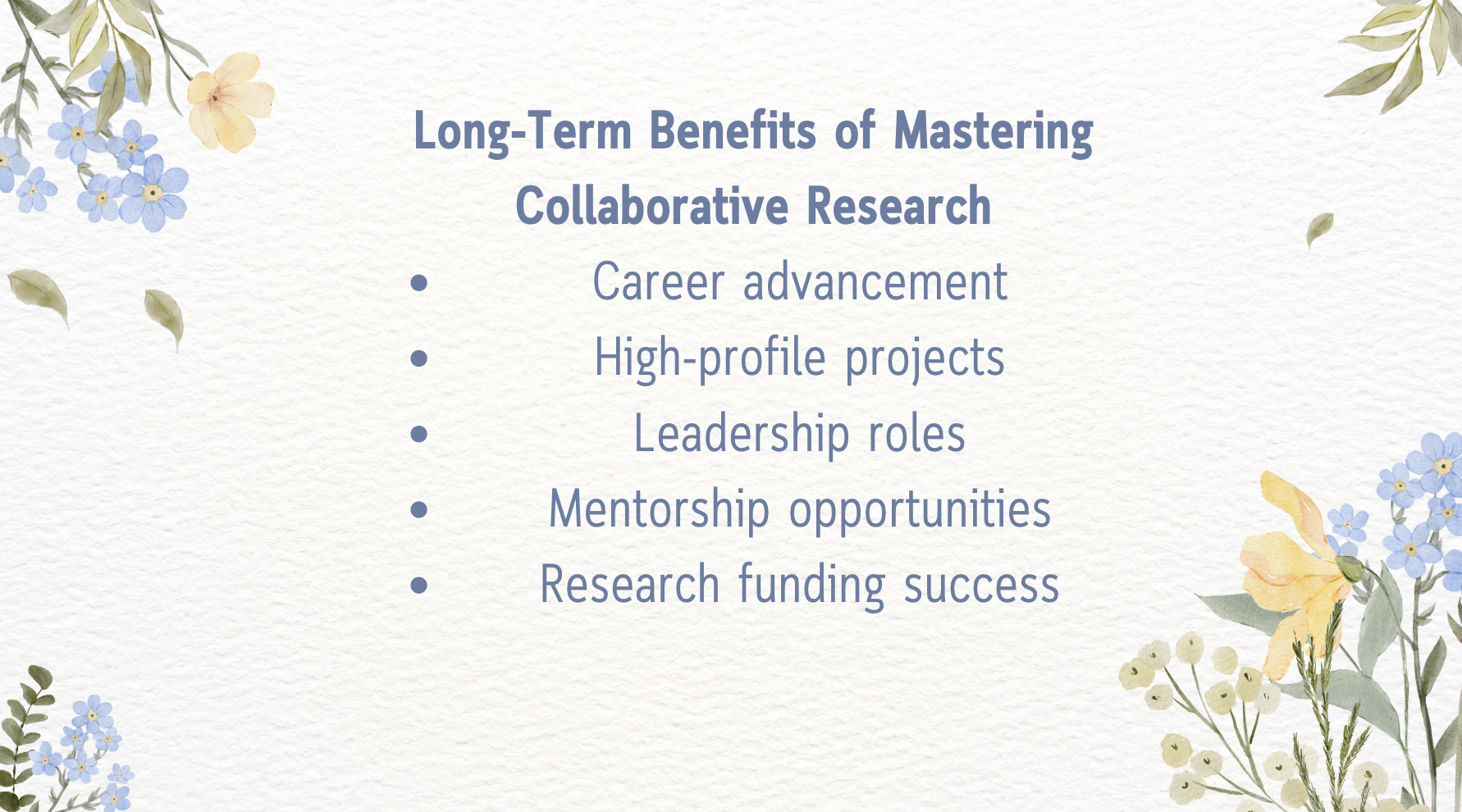
Moreover, the career advancement opportunities stemming from enhanced collaborative skills are substantial. In today's interconnected academic and professional landscapes, the ability to work effectively in diverse teams is highly valued. Researchers who excel at collaboration often find themselves:
Invited to participate in high-profile, multi-institutional projects
Offered leadership roles in research initiatives
Sought after as mentors and advisors
More successful in securing funding for future projects
By investing time and effort into mastering collaborative research techniques, you're not just improving your current work – you're setting yourself up for a future of exciting opportunities and meaningful contributions to your field. The connections you build and the reputation you establish as a skilled collaborator can open doors to career advancements that might otherwise remain closed.