
Understanding Research Stress and Its Impact
Common Sources of Research-Related Stress
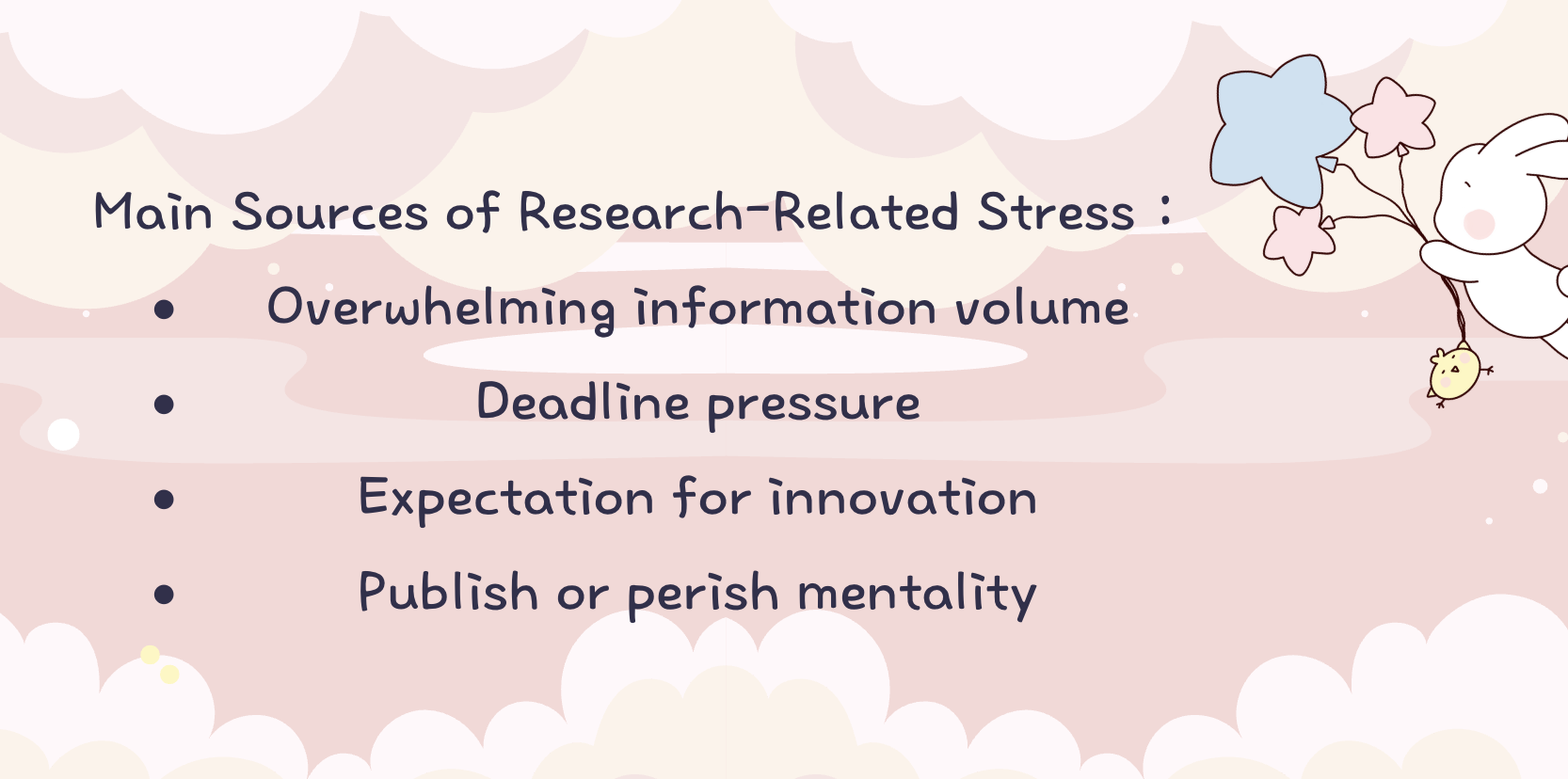
Research can be an exhilarating journey of discovery, but it often comes with a hefty side of stress. As someone who's been in the trenches of academic research, I can tell you that the pressure is real. The main sources of research-related stress include:
Overwhelming volume of information
Constant pressure of deadlines
Expectation to produce groundbreaking work
The "publish or perish" mentality
These factors can leave researchers feeling overwhelmed and struggling to keep their heads above water in the sea of academic demands.
The Consequences of Unmanaged Research Stress
When research stress goes unchecked, it can have significant consequences. It can lead to decreased productivity, reduced quality of work, impaired mental health, difficulty in spotting connections or generating innovative ideas, and potential burnout. Managing research stress isn't just about being more productive – it's about preserving your passion for discovery and your overall well-being.
Streamlining Information Gathering and Organization
Effective literature review techniques
Mastering the art of literature review is crucial for navigating the vast ocean of information. Some key techniques include clearly defining your research questions, using Boolean operators and advanced search features, developing a triage system for skimming papers, implementing a color-coding system for highlighting key points, and looking for patterns, contradictions, and gaps in existing research. Remember, a good literature review isn't just about collecting papers – it's about synthesizing information.
Implementing Smart Note-Taking Strategies
Digital tools have revolutionized note-taking. Consider using apps like Evernote or Notion for their flexibility and search capabilities. Create a template for your notes that includes fields for citation, key findings, methodology, and your thoughts. Mind mapping tools can be useful for visualizing complex ideas and relationships.
Leveraging AI-Powered Research Assistance

Benefits of AI Analysis in Research
AI is transforming the research landscape with several advantages:
Rapid processing of vast amounts of literature
Identification of patterns and connections across numerous papers
Quick identification of relevant papers, saving time in initial research stages
Ability to provide a comprehensive overview of research trends
How Ponder Transforms the Research Process
Ponder is a game-changer in AI-assisted research. It offers one-click PDF upload for instant knowledge mapping, AI-assisted mind mapping for organizing thoughts and suggesting connections, visual representation of key concepts and relationships, and time-saving features for synthesizing information from multiple sources.
Time Management Techniques for Researchers
Creating a Realistic Research Schedule
Effective time management is crucial for successful researchers. Break down your project into manageable tasks, use project management tools, and be realistic about time estimates. Identify your most productive hours and schedule demanding tasks accordingly. Use techniques like the Pomodoro method to maintain focus and productivity.
Balancing Research with Other Responsibilities
Finding balance is essential for reducing stress and maintaining productivity. Use time-blocking to dedicate specific periods to different tasks. Learn to say no to commitments that don't align with your core research goals. Make time for activities outside of research to maintain mental health and spark creativity.
Collaborative Approaches to Reduce Individual Stress

Building a Supportive Research Network
Research doesn't have to be solitary. Build a strong network by joining academic communities and forums, reaching out to researchers whose work you admire, attending conferences and setting networking goals, and forming or joining research groups within your institution.
Utilizing multi-document comparison tools
Multi-document comparison tools, like those offered by Ponder, can significantly enhance research efficiency:
Feature | Description | Benefit |
|---|---|---|
Visual mapping | Side-by-side comparison of key concepts | Reveals patterns and discrepancies |
Similarity highlighting | Identifies common themes across papers | Speeds up literature review process |
Gap analysis | Spotlights areas of consensus and controversy | Aids in identifying research opportunities |
7 Steps to Reduce Research Stress
Define clear research objectives and questions
Create a realistic schedule with manageable milestones
Implement effective literature review techniques
Utilize AI-powered research tools for efficiency
Develop a supportive research network
Practice smart note-taking and organization
Maintain work-life balance through time management
By following these steps and incorporating the strategies discussed, you can transform your research process, reduce stress, and increase productivity. Embrace these techniques, and you'll find yourself navigating the complex world of academic research with greater ease and confidence. Happy researching!