

Using AI to Summarize Text: Best AI Summarizer Tools and Research Applications
 ·7/28/2026·9 min read
In an era where information overload is a common challenge, the ability to efficiently summarize text has become increasingly valuable. This article explores the concept of AI summarization, its mechanisms, and its applications in research. Readers will learn how AI can streamline the process of distilling large volumes of text into concise summaries, making it easier to grasp essential information quickly. The rise of AI summarization tools has transformed how researchers, students, and professionals approach literature reviews and data analysis. By leveraging advanced algorithms, these tools not only save time but also enhance comprehension and productivity. This article will cover the fundamentals of AI summarization, its benefits for research, the best tools available, and the features to look for when selecting an AI summarizer.
Quick answer: The best AI text summarizer depends on your use case. Claude and GPT-4o produce the most nuanced, context-aware summaries for complex documents. SciSpace is optimized for academic papers. Otter.ai and Fireflies handle meeting transcripts. NotebookLM lets you chat with and summarize multiple uploaded documents together. For researchers who need to move past summarizing individual documents toward synthesizing themes and connections across a full library, Ponder provides the canvas for that higher-order synthesis.
What Is AI Summarization and How Does It Work
AI summarization refers to the use of artificial intelligence technologies to condense text into shorter, more digestible forms while retaining the original meaning. This process typically involves natural language processing (NLP) and machine learning algorithms that analyze the text's structure and content. The primary benefit of AI summarization is its ability to process large amounts of information quickly, allowing users to focus on key insights without wading through extensive documents.
What Are Extractive and Abstractive Summarization Methods?
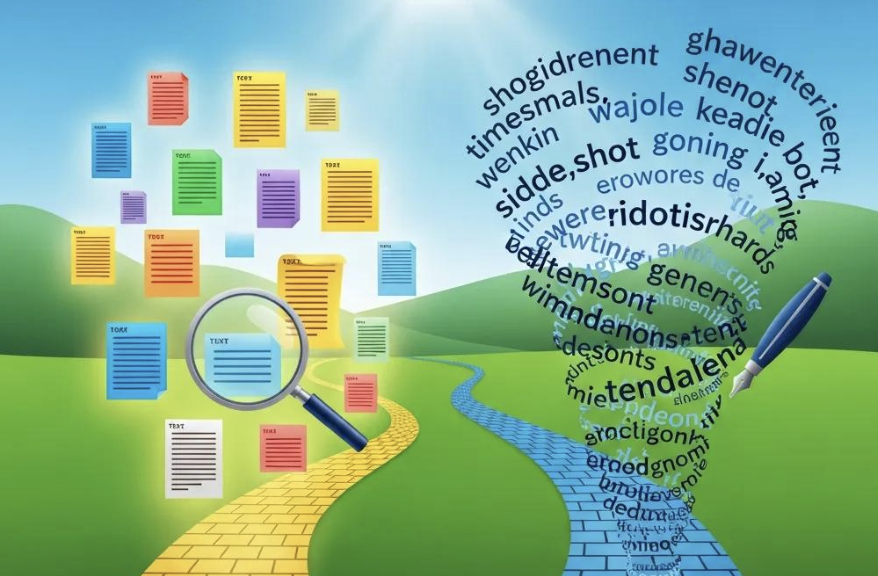
There are two main methods of AI summarization: extractive and abstractive. Extractive summarization involves selecting and compiling key sentences or phrases directly from the source text. This method is straightforward and ensures that the summary remains faithful to the original content. In contrast, abstractive summarization generates new sentences that convey the main ideas of the text, often rephrasing or paraphrasing the original content. Each method has its use cases; for instance, extractive summarization is useful for quick overviews, while abstractive summarization is better suited for generating coherent summaries that may not directly quote the source.
How Do NLP and Machine Learning Enable AI Summarizers?
Natural language processing and machine learning are critical components of AI summarization. NLP techniques allow AI systems to understand and interpret human language, enabling them to identify important concepts, relationships, and context within the text. Machine learning models, particularly those trained on large datasets, improve the accuracy and relevance of summaries by learning from examples. This combination of technologies enhances the quality of AI-generated summaries, making them more useful for users seeking to extract meaningful insights from complex information.
Further research highlights the broader impact of these AI-driven NLP tools beyond mere summarization, extending to overall writing enhancement and precision.
Why Use AI Summarizers for Research Papers and Articles?
AI summarizers offer significant advantages for researchers and students, particularly in managing the vast amounts of literature available today. By automating the summarization process, these tools save time and reduce the cognitive load associated with reading lengthy documents.
What Are the Benefits of AI Summarization for Researchers and Students?

Time Efficiency: AI summarizers can condense hours of reading into minutes, allowing researchers to focus on analysis rather than information gathering.
Improved Comprehension: By highlighting key points, AI summarizers help users grasp essential concepts quickly, facilitating better understanding of complex topics.
Enhanced Productivity: With less time spent on reading, researchers can allocate more time to critical thinking and writing, ultimately improving the quality of their work.
How Does AI Summarization Improve Literature Reviews and Thesis Writing?
AI summarization significantly enhances the literature review process by providing concise overviews of relevant studies. This capability allows researchers to identify trends, gaps, and key findings more efficiently. In thesis writing, AI summarizers can assist in synthesizing information from multiple sources, ensuring that arguments are well-supported and comprehensive. By streamlining these processes, AI summarization tools contribute to higher-quality academic writing and research outcomes.
Indeed, the application of generative AI specifically for systematic literature reviews offers a structured approach to data analysis and synthesis, further streamlining the research process.
What Are the Best AI Summarizer Tools Available Today?
Several AI summarization tools are available, each offering unique features and capabilities. Understanding these options can help users select the best tool for their specific needs.
How Does Ponder AI Compare to Other Summarization Tools?
Ponder AI is a relatively new AI summarization tool that offers advanced capabilities in understanding context and generating coherent summaries. While it utilizes sophisticated NLP algorithms to enhance the accuracy of its summaries, it is one of several tools in the market with similar features. This tool can be beneficial for researchers who require precise and contextually relevant summaries of academic papers and articles, but users should also consider other established tools depending on their specific needs.
Which AI Summarizers Are Best for Document and Article Summaries?
When selecting an AI summarizer, consider the following tools based on user needs:
Ponder AI: Ideal for academic research, offering deep contextual understanding and high-quality summaries.
SummarizeBot: A versatile tool that supports various document types, including PDFs and web pages, making it suitable for diverse applications.
SMMRY: A straightforward tool that provides quick summaries, perfect for users needing fast insights without extensive features.
How Can You Summarize Different Text Types Using AI?
AI summarization is versatile and can be applied to various text formats, including academic papers, web pages, and multimedia content.
How to Summarize PDFs, Web Pages, and Research Papers with AI?
To summarize PDFs and research papers, users can utilize tools like Ponder AI, which can extract key points and generate concise summaries. For web pages, AI summarizers can analyze the content structure and highlight essential information, making it easier to digest online articles. Following best practices, such as ensuring the source material is well-structured, can enhance the effectiveness of AI summarization.
Can AI Summarize Audio and Video Content for Research?
AI technology has advanced to the point where it can also summarize audio and video content. Tools equipped with speech recognition capabilities can transcribe spoken words into text, which can then be summarized using traditional AI summarization techniques. This functionality is particularly useful for researchers who need to analyze interviews, lectures, or presentations quickly.
What Features Should You Look for in an AI Summarizer?
When selecting an AI summarizer, certain features can significantly impact its effectiveness and usability.
Why Are Accuracy, Customization, and Integration Important?
Accuracy: The primary goal of any summarization tool is to produce accurate and relevant summaries. High accuracy ensures that users receive trustworthy information.
Customization: Users should be able to adjust settings to tailor summaries to their specific needs, such as length and focus areas.
Integration: The ability to integrate with other tools and platforms enhances the summarizer's utility, allowing for seamless workflows in research and writing.
How Do Knowledge Graphs and Mind Mapping Enhance AI Summaries?
Knowledge graphs and mind mapping techniques can significantly enhance the quality of AI-generated summaries. By visually representing relationships between concepts with knowledge graphs, these tools help users understand complex information more intuitively. AI summarizers that incorporate these techniques can provide richer, more contextually aware summaries, making them more valuable for users.
What Are the Challenges and Future Trends in AI Text Summarization?
Despite the advancements in AI summarization, several challenges remain that researchers and developers must address.
What Are Common Challenges Like Context Preservation and Bias?
One of the primary challenges in AI summarization is preserving context. Summaries must accurately reflect the original text's meaning without losing critical nuances. Additionally, bias in AI models can lead to skewed summaries, which may misrepresent the source material. Addressing these issues is essential for improving the reliability of AI summarization tools.
How Is Generative AI Shaping the Future of Summarization?
Generative AI is poised to revolutionize summarization by enabling more sophisticated and contextually aware outputs. As these technologies evolve, we can expect AI summarizers to produce increasingly accurate and coherent summaries that better serve the needs of researchers and professionals alike. The future of AI summarization will likely involve enhanced algorithms that can learn from user feedback, further refining their capabilities.
This future vision is supported by ongoing research advocating for advanced generative AI methods to tackle information overload and improve comprehension in academic contexts.
Feature | Description | Importance |
|---|---|---|
Accuracy | Produces reliable, contextually relevant summaries | High |
Customization | Adjustable summary length and focus areas | Medium |
Integration | Compatibility with research workflows and document sources | High |
AI summarization tools are transforming how we process and understand information. By leveraging advanced technologies, these tools not only save time but also enhance comprehension and productivity. As the field continues to evolve, staying informed about the latest developments and tools will be crucial for researchers and students alike.
Frequently asked questions
What is the best free AI text summarizer?
The best free AI text summarizers in 2026: Claude.ai (Anthropic's free tier — paste any text up to ~100K tokens, ask for a summary; strong at maintaining nuance and key claims); ChatGPT free tier (GPT-4o, handles long documents; accessible without subscription with rate limits); QuillBot Summarizer (free for up to 1,200 words, generates one-paragraph summaries, easy UI); SMMRY (free, reduces text to user-specified number of sentences); Resoomer (free, focuses on argumentative texts). For academic text specifically, SciSpace summarizes papers with context for technical terms, and Semantic Scholar's TLDR system generates single-sentence AI summaries of 200M+ papers. The "best" depends on text length and whether you need a quick extract or a comprehension-level summary.
How accurate are AI text summarizers?
AI text summarizers are generally accurate for well-structured factual text, but accuracy degrades for content that relies on nuance, irony, or implied meaning. Key accuracy patterns: (1) Strong: summarizing news articles, technical documentation, factual reports — AI captures main points reliably; (2) Weak: summarizing argumentative texts (AI may misrepresent the author's position), literary analysis, creative writing, or highly technical content where understanding context matters; (3) Variable: academic abstracts — extractive AI (pulling key sentences) is highly accurate; abstractive AI (paraphrasing) sometimes changes meaning. For high-stakes use, always read critical sections of the original — use AI summaries for orientation and triaging, not as a substitute for primary reading.
Can AI summarizers handle academic papers and technical text?
AI summarizers handle academic papers with growing competence, but with important caveats. General-purpose AI (Claude, GPT-4o): handles most academic text well, particularly in STEM fields with clear structure (Abstract, Methods, Results). May struggle with discipline-specific jargon without context. Domain-specific tools: Semantic Scholar's TLDR (trained on academic text — more reliable for research contexts); SciSpace Copilot (explains technical terms in papers, designed for academic readers); Elicit (extracts structured data from papers, not just summaries — better for systematic comparison across multiple papers). For technical text with mathematical content, AI summaries may miss quantitative nuances. Always verify specific claims from original data sections.
What is the difference between extractive and abstractive AI summarization?
Extractive summarization selects and strings together the most important sentences from the original text without changing the wording — like highlighting the key sentences yourself. More accurate (no paraphrasing errors), but can feel choppy. Tools: SMMRY, older extractive systems. Abstractive summarization generates new text that captures the meaning of the original — more like a human summary. More natural reading, but risks introducing inaccuracies, rephrasing nuanced claims, or omitting context. GPT-4o, Claude, and most modern LLM-based tools use abstractive summarization. Most practical AI summarizers today use a hybrid: extractive methods to select key sections, then abstractive language models to rewrite them coherently.
Are AI summaries good enough to replace reading the original text?
For most academic and research purposes, AI summaries should supplement but not replace reading the original. Summaries are sufficient for: deciding whether a source is relevant before investing time in reading it fully; getting context before a deeper read; refreshing your memory on texts you've read before. Summaries are NOT sufficient for: citing specific claims in academic work (cite the original); understanding methodology and results critical to your research; any analysis requiring understanding of how arguments are constructed. The core problem is that AI summarization optimizes for the "gist" — it loses nuance, qualifications, and the development of evidence that makes academic reading valuable. Use AI summaries as efficient triage, not as a reading substitute.
See also: Best AI Tools to Summarize Research Papers | Best ChatPDF Alternatives | Best NotebookLM Alternatives | Best AI Research Tools for Students | Best Semantic Scholar Alternatives