
Build Effective Knowledge Graphs for Research with Ponder: AI-Powered Knowledge Mapping for Deeper Insights
 ·7/28/2026·15 min read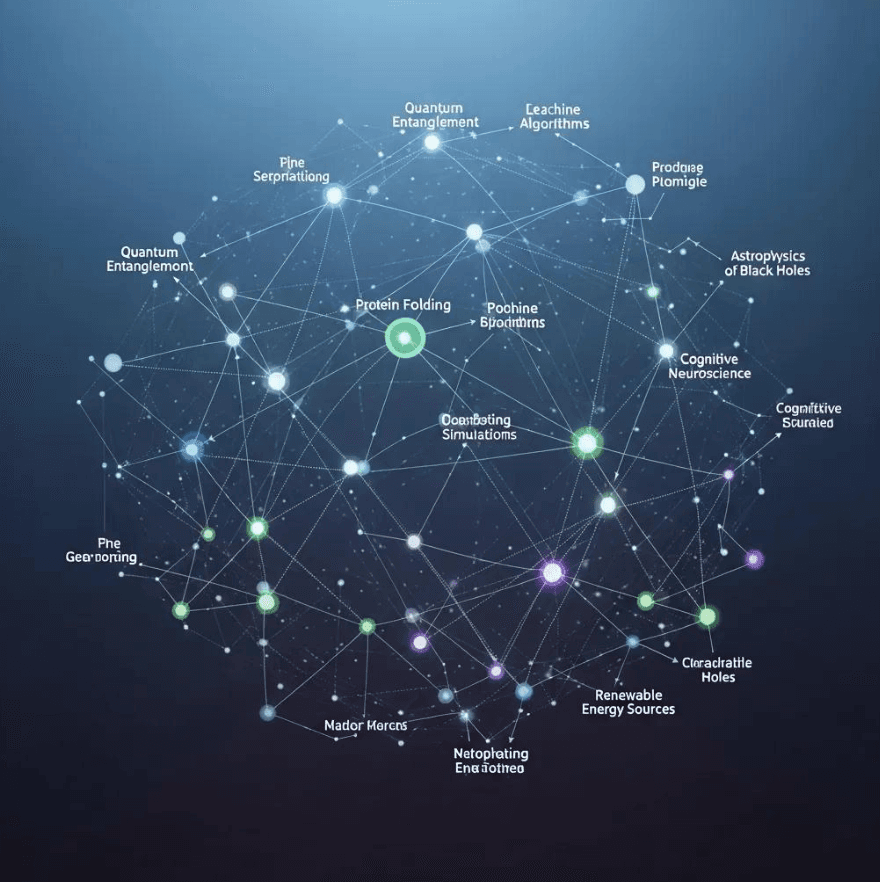
Research knowledge graphs convert scattered literature, notes, and datasets into connected, queryable structures that reveal relationships and accelerate insight generation. By explicitly modeling entities (papers, concepts, methods) and relationships (cites, supports, contradicts), knowledge graphs make reasoning over research artifacts computationally tractable and human-readable. This article shows researchers how to design and build knowledge graphs for research, explains core semantic technologies like entity extraction and semantic linking, and maps those concepts to practical tools and workflows. You will learn what a research knowledge graph is, how semantic connections change discovery, how to pipeline ingestion→extraction→visualization, and how an all-in-one workspace can be used as a case example for implementation. The guide emphasizes reproducible steps, practical examples, and exportable outcomes so you can start turning literature into structured knowledge and actionable insights. Throughout, terms such as knowledge graph for research, semantic networks for research, and entity extraction for research are integrated to help you apply these concepts directly to literature reviews, synthesis projects, and collaborative studies.
Quick answer: Knowledge graphs represent entities and relationships in a structured, queryable network — ideal for research synthesis, enterprise search, and AI-powered recommendations. Building one from scratch requires tools like Neo4j (graph database), Protégé (ontology design), or Wikidata-style structured data. For researchers who want knowledge-graph-style insights without building infrastructure, Ponder's canvas creates a personal knowledge graph from your uploaded PDFs, papers, and notes — with AI surfacing relationships automatically.
What Is a Knowledge Graph and Why Is It Essential for Research
Knowledge mapping structured semantic network where nodes represent entities like papers, concepts, authors and methods, and edges represent typed relationships such as cites, extends, or contradicts. The mechanism that makes knowledge graphs powerful is semantic linking: canonicalized entities and explicit relationships enable queries that go beyond keyword search and support pattern detection and hypothesis tracing. Researchers benefit because graphs surface non-obvious connections, allow longitudinal tracking of ideas, and convert tacit notes into reusable, queryable assets. Understanding these mechanics is the foundation for building KGs that improve literature reviews, syntheses, and exploratory analysis. The next subsection breaks down the KG into its core components so you can map your research artifacts onto nodes, edges, and attributes.
What Are the Core Components of Knowledge Graphs: Entities, Relationships, and Attributes?
Entities are the nodes that represent discrete research items—papers, datasets, concepts, methods, or people—and they are the basic semantic units researchers operate on. Relationships are typed edges that connect entities with explicit predicates such as "cites," "applies," "supports," or "contradicts," enabling relational queries that reveal pathways through the literature. Attributes (metadata) attach to entities and edges and include publication year, experimental method, statistical effect sizes, and tags that make filtering and faceted search possible. For example, a triple might read: "Paper A — cites — Paper B" with attributes on Paper A such as year: 2024 and method: randomized trial. Translating notes and PDFs into these discrete components is the practical next step for creating a usable research knowledge graph.
Introductory EAV table to illustrate how common research artifacts map into KG structures:
Research Entity | Characteristic | Example Value |
|---|---|---|
Paper | Type | Empirical study |
Concept | Related Concepts | "causal inference; propensity score" |
Author | Affiliation | University department |
Method | Parameters | "randomized, n=120, double-blind" |
This table shows how everyday research artifacts map to KG building blocks and clarifies the practical metadata you should extract when constructing a graph. Understanding these mappings helps prioritize what to extract first when ingesting sources.
How Do Semantic Connections Enhance Research Data Understanding?
Semantic connections convert isolated facts into pathways for reasoning: AI tool visualize PDF connections methods to outcomes and papers to conceptual lineages reveals emergent patterns that keyword search hides. Mechanically, semantic links enable higher-order queries such as "find studies that apply method X and report effect Y under condition Z," which supports targeted evidence aggregation and meta-synthesis. A before/after scenario highlights the difference: a flat folder of PDFs requires manual triage, whereas a semantic graph surfaces clusters, citation paths, and contradictions automatically. These capabilities accelerate hypothesis generation and reduce the time to discovery, and the following section explains how platforms can operationalize entity extraction and linking in practice.
How Does Ponder AI Build Knowledge Graphs for Research?
A practical pipeline for building a research knowledge graph typically follows ingest → entity extraction → semantic linking → visualization and export, with human curation at each stage to ensure accuracy and relevance. The mechanism begins with multi-format ingestion where documents, web pages, and media are parsed into text and metadata, followed by automated identification of entities and relationships. Semantic linking canonicalizes entities across sources so that the same concept or author is recognized across multiple documents, producing a coherent graph rather than fragmented nodes. Visualization on an interactive canvas then enables exploration, clustering, and iterative curation to refine the graph for analysis. Below we map platform features to outcomes to make this abstract pipeline concrete and actionable.
What Role Does AI-Powered Entity Extraction and Semantic Linking Play in Ponder?
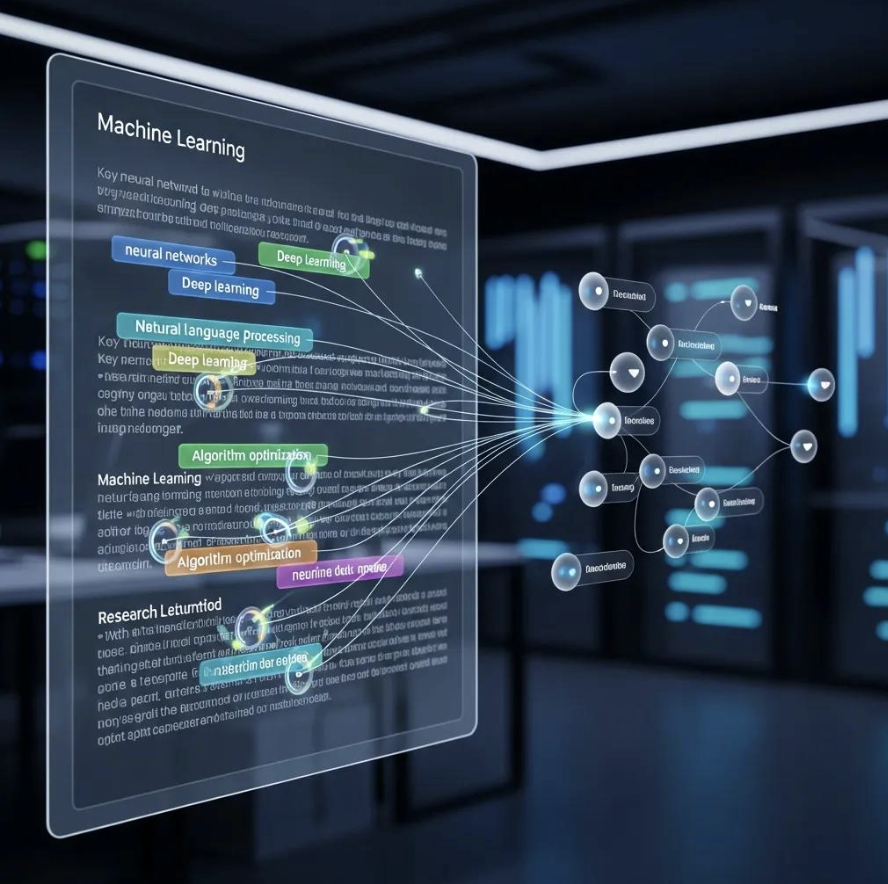
AI-powered entity extraction automates identification of entities (concepts, methods, measurements) and associated metadata from ingested sources, reducing manual tagging and enabling scale. The extraction models combine pattern recognition, named-entity detection, and heuristics to propose nodes and candidate relationships that a researcher then validates, ensuring high precision while saving time. Disambiguation and canonicalization consolidate duplicate mentions—such as varied spellings of an author name or synonyms for a concept—so the graph reflects true semantic identity. Sample output from a single paper might include nodes for "instrumental variables," "sample size = 350," and "Author X," connected by edges like "applies-method" and "reports-result," which you can then refine on the canvas.
Introductory feature→outcome mapping table:
Extraction Component | Platform Feature | Outcome |
|---|---|---|
Entity identification | AI research agent powered extraction | Structured nodes created from text |
Disambiguation | Canonicalization engine | Unified entity references |
Relation proposal | Semantic linking suggestions | Preliminary edges for curation |
The construction of large-scale knowledge graphs, particularly in specialized domains like biomedicine, often involves sophisticated information extraction pipelines to achieve high accuracy and comprehensiveness.
How Does Ponder’s Infinite Canvas Visualize Complex Research Networks?
The infinite canvas visualizes nodes and relationships in a spatial layout that supports zooming, panning, clustering, and free-form arrangement, turning abstract graphs into navigable thought maps. Interaction patterns such as grouping related papers, expanding a node to reveal underlying citations, and filtering by metadata allow researchers to surface thematic clusters and trace conceptual lineages. By organizing information spatially, the canvas aids memory and insight formation: proximity and visual grouping reinforce semantic associations that help researchers recall and reason about complex connections. Practical tips for managing large graphs include iterative pruning, using tags to create layered views, and creating focused sub-canvases for single hypotheses or literature subfields.
Practical implementation note: Ponder’s workspace combines semantic extraction and the infinite canvas so researchers can iterate between automated suggestions and manual curation without switching tools. This integration shortens the cycle from ingestion to insight and makes the visualization step a natural continuation of extraction and linking.
What Are the Key Benefits of Using Ponder for Research Knowledge Graph Construction?
Using a unified workspace that combines ingestion, AI assistance, semantic linking, and visualization provides concrete benefits: faster literature synthesis, improved discovery of novel connections, and easier production of shareable, structured outputs for collaboration. Mechanistically, AI suggestions and canonicalization reduce the manual overhead of entity normalization, while the canvas supports emergent clustering and narrative-building needed for publication-ready syntheses. For collaborative projects, shared canvases and exportable assets mean teams can converge on a common semantic model and hand off reproducible artifacts. The next subsections illustrate specific researcher workflows and show measurable impacts on speed and synthesis quality.
Key researcher benefits from using an integrated knowledge mapping platform:
Accelerated Literature Synthesis: Automated extraction and semantic linking reduce manual triage and speed up review cycles.
Novel Connection Discovery: Semantic graph structures surface indirect relationships and non-obvious clusters.
Shareable Structured Outputs: Export formats turn insights into reports, mind maps, and reusable Markdown assets.
These benefits translate into clearer evidence trails and faster iteration for research projects, and the following table links platform capabilities directly to research impacts.
EAV table linking benefit, capability, and impact:
Benefit | Ponder Capability | Research Impact |
|---|---|---|
Faster synthesis | AI entity extraction | Reduced time for literature triage |
Discovery of links | Semantic linking | Novel hypothesis generation |
Reusable outputs | Structured export (reports, Markdown) | Easier collaboration and reproducibility |
How Can Ponder Accelerate Literature Reviews and Reveal Novel Connections?
Ponder accelerates literature reviews by AI tool visualizing citation networks entities and citations, clustering related works, and proposing connective edges that reveal thematic groupings and citation paths. The AI thinking partnership suggests follow-up queries and blind-spot prompts, which helps researchers identify overlooked papers or alternative methods. A concrete workflow might ingest an initial set of 10–20 key papers, let the platform extract entities and propose relations, then expand the graph to include second-degree citations and method-similarity clusters—reducing the manual discovery overhead dramatically. These capabilities not only save time but also increase the likelihood of finding cross-disciplinary links that lead to novel insights.
A short illustrative scenario: a researcher maps ten seminal papers on a method, uses semantic clustering to reveal two unexpected application domains, and follows those clusters to new literature that shifts the research hypothesis. The next subsection explains how pattern recognition over synthesized data supports deeper insight generation.
How Does Ponder Help Synthesize Data for Deeper Insights and Pattern Recognition?
Synthesis happens when disparate findings are linked through shared methods, outcomes, or conceptual labels, and a semantic knowledge graph makes those links explicit and searchable. By tagging results, limitations, and effect sizes as attributes on nodes and then clustering edges by relation types, researchers can detect patterns such as recurring methodological limitations or consistent effect directions across related studies. Iterative refinement on the canvas—merging synonyms, annotating contradictions, and creating subgraphs—enables hypothesis iteration and strengthens the evidence trail for conclusions. This structured synthesis supports reproducibility because the graph preserves provenance for every connection and exportable assets capture the reasoning behind groupings.
A practical tip is to use semantic tags for "limitation" and "replication status" as attributes; these make it easy to filter for robustness and identify areas needing further replication in future work.
How Does Ponder Integrate Diverse Research Sources into Knowledge Graphs?
Effective knowledge graphs require broad coverage across document types, so ingestion pipelines must normalize content from PDFs, videos, web pages, and plain text into structured text and metadata. The ingestion mechanism extracts text, timestamps, embedded ps, and citation strings where possible, then feeds those outputs into entity extraction and linking. Normalization includes parsing bibliographic references, resolving author names, and extracting section-level structure from papers so nodes can be tied to specific statements or results. This cross-format integration reduces manual copying and ensures that knowledge graphs reflect the full spectrum of research artifacts rather than only curated lists.
Which File Types and Data Formats Can Ponder Ingest for Knowledge Mapping?
Common research inputs include PDFs, recorded talks or videos, web pages, and raw text exports; each format contributes unique information such as ps, timestamps, or in-line citations. PDFs typically yield sectioned text and citation strings that become primary nodes and attributes, while videos provide timestamps and transcriptions that link spoken insights to timestamps and topics. Web pages and scraped content add blog posts, preprints, and commentary that can enrich the graph with broader context and debate. Best practices include feeding canonical PDFs when available, supplying native transcripts for video, and validating extracted citations to ensure bibliographic accuracy.
A short example workflow: ingest a PDF, verify parsed section headers and citation extraction, then run entity extraction to generate initial nodes for methods, results, and cited works. The following subsection discusses how this integrated ingestion reduces friction across workflows.
How Does Seamless Integration Improve Research Workflow Efficiency?
Combining ingestion, extraction, linking, and visualization into a single workspace eliminates the overhead of switching between multiple tools and manual handoffs that introduce errors and delay. Researchers save time by avoiding format conversions and redundant metadata entry; instead, the pipeline automatically normalizes inputs and proposes structured nodes and edges for curator review. Collaborative efficiencies arise because team members work on the same canvas and share structured exports, reducing duplicate effort and improving alignment on the research model. Overall, a consolidated workflow shortens the path from raw source to publishable synthesis and enhances reproducibility by preserving provenance.
To operationalize these gains, teams should define ingestion conventions and a small initial ontology (key entity types and relation labels) so automatic extraction aligns with project needs and reduces curation load.
How Does Ponder Compare to Traditional Knowledge Graph Tools and AI Research Assistants?
Traditional knowledge graph toolchains often separate ingestion, extraction, linking, storage, and visualization into distinct systems—requiring connectors and manual integration that slow research cycles. By contrast, an integrated workspace prioritizes deep thinking and iterative insight creation: automated suggestions speed routine tasks, but the interface emphasizes exploration, hypothesis-building, and narrative construction. Conventional approaches remain appropriate for large-scale production graphs and enterprise pipelines where bespoke databases and performance tuning are critical, but for research-focused synthesis and idea discovery, an all-in-one approach reduces friction and fosters insight. The next subsections detail unique platform advantages and how an integrated workspace supports productivity.
What Unique Advantages Does Ponder Offer for Deep Thinking and Knowledge Mapping?
An AI thinking partnership offers conversational, follow-up capable assistance that surfaces blind spots and suggests avenues for exploration rather than merely summarizing text. The infinite canvas mirrors thought processes by allowing free-form spatial reasoning and the assembly of narrative threads across nodes, which supports creative synthesis and hypothesis scaffolding. Structured export options such as reports, mind maps, and Markdown preserve both the semantic graph and the narrative context, enabling reuse in manuscripts, grant proposals, or teaching. Together, these elements prioritize depth of understanding and iterative exploration, making the environment particularly suited to deep thinking workflows.
Comparison of use-case fit in table form to highlight where an integrated workspace excels:
Characteristic | Conventional Stack | Integrated Workspace |
|---|---|---|
Focus | Production-scale graphs | Insight generation and synthesis |
UX | Tool-specific learning curve | Single unified canvas |
Integration | Custom connectors | Built-in ingestion and export |
AI Assistance | Separate tooling | Conversational agent + suggestions |
How Does Ponder’s All-in-One Workspace Enhance Research Productivity?
Consolidated workflows reduce context switching, which saves time and cognitive load, while AI-assisted entity extraction reduces repetitive tagging tasks that typically consume early phases of a review. Productivity can be measured by metrics like reduced hours to first synthesis, number of curated insights per week, and citation coverage of a topic area; these metrics improve when ingestion and linking are automated and visualization supports iterative curation. Team collaboration benefits from shared canvases and exportable assets that preserve both narrative and provenance, accelerating consensus-building and handoffs between members. For researchers focused on hypothesis development and narrative synthesis, these productivity gains compound across projects and over time.
To capitalize on these efficiencies, adopt a small initial ontology and commit to periodic graph curation cycles so the workspace remains current and actionable.
How Can Researchers Get Started Building Knowledge Graphs with Ponder?
Getting started involves a short, repeatable onboarding loop: choose a focused first project, ingest representative sources, run extraction and linking, curate nodes and edges on the canvas, and export structured assets for sharing or publication. This approach lowers the barrier to entry by producing a meaningful deliverable early—such as a mapped literature review of ten seminal papers—that demonstrates the workflow’s value. Exports such as reports, mind maps, and Markdown allow you to preserve both the semantic structure and the narrative you build, enabling reproducibility and further analysis. The following subsections give a concrete step-by-step checklist and describe export workflows to carry your insights into other tools and outputs.
What Are the First Steps to Create a Research Knowledge Graph Using Ponder?
Begin with a small, bounded literature set—ten to twenty key papers—and define a compact ontology of entities and relations to guide extraction and curation. Ingest PDFs, web pages, and recorded talks for that focused topic, then run automated entity extraction to populate initial nodes and suggested edges for review. Curate by resolving duplicates, annotating attributes (method, result, limitation), and arranging nodes on the infinite canvas to highlight themes or hypothesis chains. Iterate by expanding the graph with second-degree citations or related concepts suggested by the AI thinking partnership; small, repeated cycles build a robust, navigable knowledge graph without overwhelming curation demands.
A numbered getting-started checklist for quick onboarding:
Select scope: Define topic and gather 10–20 core sources.
Ingest: Upload PDFs, transcriptions, and web pages.
Extract: Run AI entity extraction and review proposed nodes.
Curate: Canonicalize entities, add attributes, and link edges.
Visualize & export: Arrange on canvas and export report or Markdown.
How Can Users Export and Share Structured Knowledge Assets from Ponder?
Once curated, knowledge graphs and canvases can be exported as structured reports, mind maps, or Markdown files that preserve both semantic structure and narrative annotations. Reports are useful for stakeholder summaries and reproducibility documentation, mind maps provide visual overviews for presentations or teaching, and Markdown exports support reproducible analysis workflows by integrating into notes or version-controlled repositories. Recommended sharing workflows include exporting a curated subgraph for peer review, attaching provenance metadata to all exports, and using Markdown exports as the starting point for methods sections or literature review drafts. These export options make it easy to translate exploratory insight into formal outputs.
Brief export best practices:
Export both the graph (structure) and narrative (annotations) for complete reproducibility.
Use Markdown for integration with writing and version control.
Share focused subgraphs to enable targeted peer feedback.
Frequently asked questions
What is a knowledge graph and how does it work?
A knowledge graph is a structured representation of knowledge as a network of entities (nodes) and relationships (edges). Each connection is typically stored as a triple: Subject → Predicate → Object (e.g., "Einstein → born_in → Ulm"). This formal structure allows machines to reason about the relationships, enabling queries that natural language text cannot support. How it works: entities in the real world (people, places, concepts, events) are represented as nodes; relationships between them are labeled edges; the resulting graph can be queried for complex relationships — "find all researchers who work on X and have published in Y." Large-scale examples: Google Knowledge Graph (powers the "knowledge panel" on search), Wikidata (open, 100M+ items), DBpedia. Smaller-scale personal knowledge graphs: Obsidian (personal notes as a graph), Ponder's research canvas (research concepts connected to source documents).
What is the difference between a knowledge graph and a database?
Knowledge graphs and relational databases both store structured information, but differ fundamentally in how relationships are represented: Relational database: organizes data in tables (rows and columns); relationships are implied through foreign keys and require JOIN queries to traverse. Optimized for tabular data with predictable structure. Knowledge graph: organizes data as a graph of entities and relationships; any entity can relate to any other without predefined schema. Optimized for traversing complex, unknown-in-advance relationship paths ("who are the second-degree connections between A and B?"). Practical difference: a database is better for structured, schema-predictable data (customer orders, inventory). A knowledge graph is better for representing domain knowledge with complex, evolving relationships — scientific literature, organizational knowledge, encyclopedic content. Many enterprise systems now combine both: relational databases for structured data + knowledge graph layer for semantic relationships.
What are knowledge graphs used for in research and academia?
Knowledge graphs have several important applications in research and academia: Biomedical research: knowledge graphs connect genes, proteins, diseases, drugs, and experimental findings — enabling computational drug discovery and hypothesis generation (e.g., Bio2RDF, UniProt). Scientific literature graphs: Microsoft Academic Graph, Semantic Scholar's graph connects papers, authors, citations, and fields — powers semantic search and citation analysis. Personal research knowledge: researchers build personal knowledge graphs in Obsidian or similar tools to connect concepts across papers and notes. Curriculum design: educational knowledge graphs map prerequisite relationships between concepts to design optimal learning sequences. Research synthesis: Ponder's research canvas creates a lightweight personal knowledge graph from your uploaded papers and notes — useful for synthesizing across a body of literature.
How can I build my own personal knowledge graph?
Building a personal knowledge graph for research or learning: Best approach for researchers: Use Obsidian (free, local) — write notes in Markdown files, link notes using [[wiki-links]], and the graph view automatically visualizes the emerging network. The graph grows organically as you add notes and links. Source-connected knowledge graph: Ponder's research canvas creates a knowledge graph where each node can trace back to the specific source document it came from — useful when your graph needs to be evidentially grounded. Formal RDF graph: Protégé (free, open-source ontology editor) for building formal, machine-queryable knowledge graphs. Getting started advice: start small (10-20 concepts) and let the graph grow organically. The key habit: every time you learn a new concept, ask "how does this connect to what I already know?" and add a link. Don't wait to understand a domain fully before you start mapping it.
What is the relationship between knowledge graphs and AI?
Knowledge graphs and AI have a complementary relationship: Knowledge graphs enhance AI: by providing structured, reliable factual knowledge, knowledge graphs reduce AI hallucination. Large language models trained on text are good at language but poor at consistent factual knowledge; pairing them with a knowledge graph (retrieval-augmented generation or RAG) improves accuracy. AI builds knowledge graphs: modern AI can extract entities and relationships from text at scale — automating the creation of knowledge graphs from unstructured documents. AI queries knowledge graphs: AI interfaces make knowledge graphs accessible to non-technical users — ask a natural language question, AI translates it to a graph query, returns structured results. Research context: tools like Ponder use this architecture: your uploaded papers form a lightweight knowledge base, and Ponder's AI queries across it to answer your research questions with grounded, source-cited responses rather than hallucinated ones.
See also: Knowledge mapping process · Visual knowledge mapping · Concept map examples