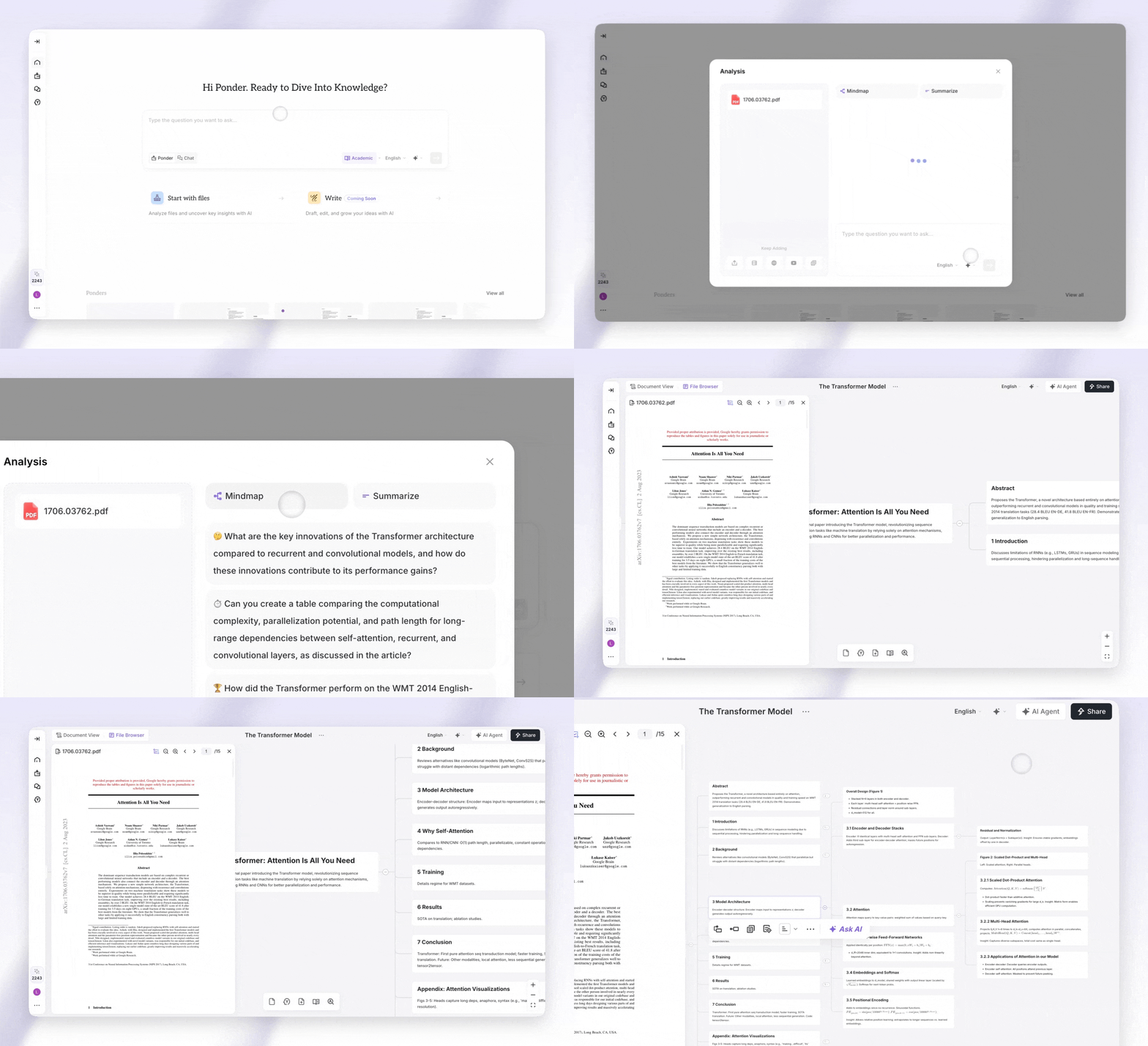
Tackling comprehensive research projects can feel overwhelming. You need weeks to gather information and verify sources. Synthesizing findings into something meaningful takes even more time.
What if you could cut that time dramatically while improving quality? Ponder transforms how professionals work as your intelligent research assistant.
This advanced ai agent serves as your dedicated research copilot. It delivers expert-level analysis without the traditional time investment.
Ponder's powerful framework is designed to accelerate your workflow from day one. It's ready to use right out of the box. No complex setup or training period required.
The platform delivers actionable and high-quality findings that go beyond surface-level summaries. You'll receive relevant insights drawn from in-depth analysis. This gives you confidence to make informed decisions quickly.
Integration fits seamlessly into your existing ecosystem through flexible API connections. You can automate workflows and enable smarter processes without disrupting current systems. Ponder handles the heavy lifting while you focus on what matters most.
What Makes an AI Research Agent Different from Traditional Research
Manual research techniques differ greatly from AI research agents in speed, accuracy, and comprehensiveness. Traditional methods require hours of manual searching, reading, and note-taking across various platforms. AI research agents automate these processes while adding intelligence that humans can't match at scale.
The transformation goes beyond simple speed improvements. AI agents like Ponder fundamentally change how we approach data collection, analysis, and validation. They bring together capabilities that would require entire research teams to accomplish manually.
Comprehensive Data Gathering from Multiple Sources
Traditional research often limits investigators to a handful of databases and journals they can realistically monitor. Researchers must manually search each platform, download relevant documents, and organize findings into coherent structures. This AI research tool creates natural bottlenecks that restrict the scope of any investigation.
Ponder eliminates these limitations by simultaneously accessing dozens of information sources. The system gathers data from academic databases, industry reports, real-world datasets, and emerging research repositories all at once. This parallel processing ensures you never miss crucial information simply because you didn't check every possible source.
The comprehensiveness extends to source diversity as well. While human researchers might favor familiar databases, AI agents explore without bias. They pull insights from newly published papers, historical archives, and cross-disciplinary sources that might not appear in typical searches in academic research writing.
This multi-source approach also reduces the risk of research gaps. AI-powered data collection creates a more complete picture by systematically covering ground that would take weeks or months to explore manually.
Deep Research with Automated Synthesis
Gathering information represents only the first step in quality research. The real value emerges when you can synthesize disparate findings into meaningful insights. Traditional research requires researchers to read through hundreds of pages, identify patterns manually, and draw connections between different studies.
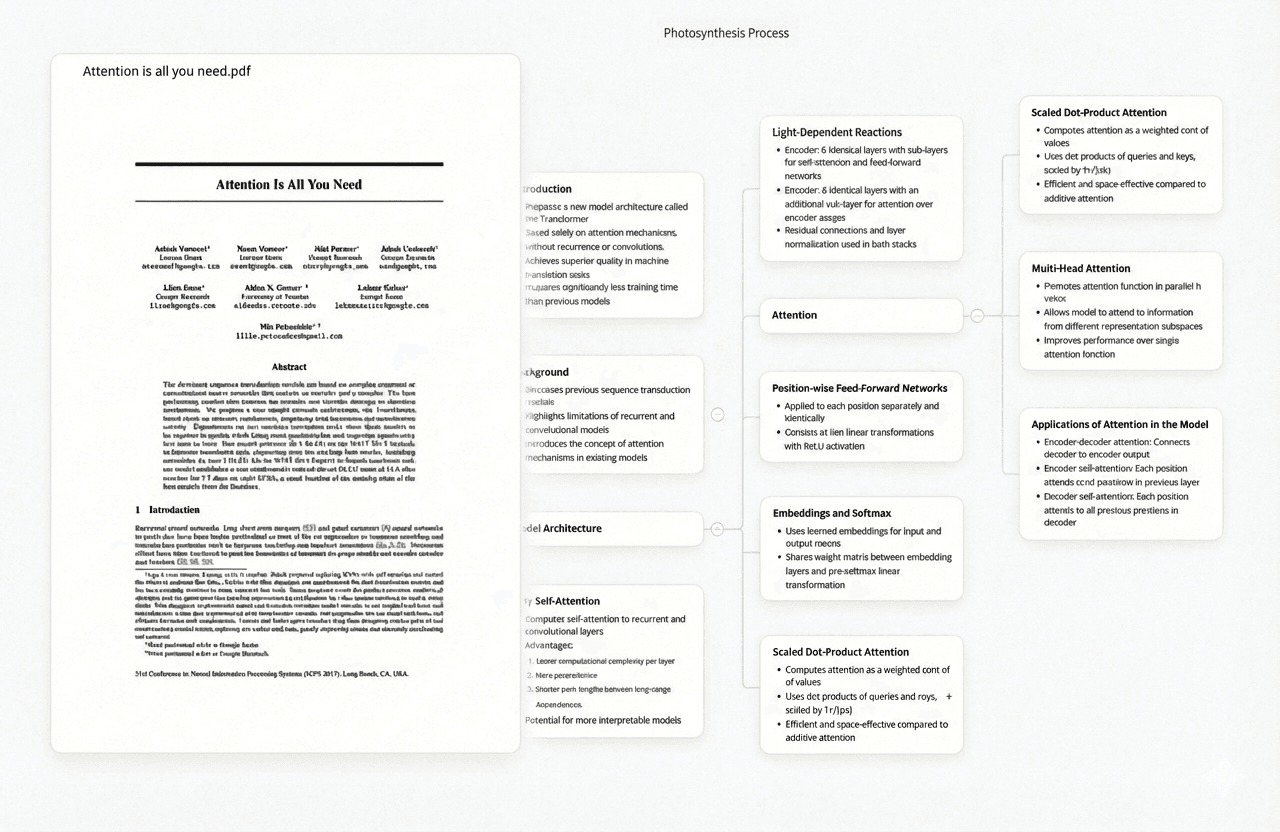
Automated synthesis changes this equation entirely. Ponder doesn't just collect information—it analyzes relationships between data points, identifies contradictions, and highlights emerging trends. The system evaluates each source against established benchmark standards to determine reliability and relevance.
This intelligent processing reveals research gaps that human reviewers might overlook. The AI compares findings across multiple sources and spots missing variables, unexplored angles, and opportunities for novel contributions. These insights would require extensive scholarly expertise and countless hours to uncover through traditional methods.
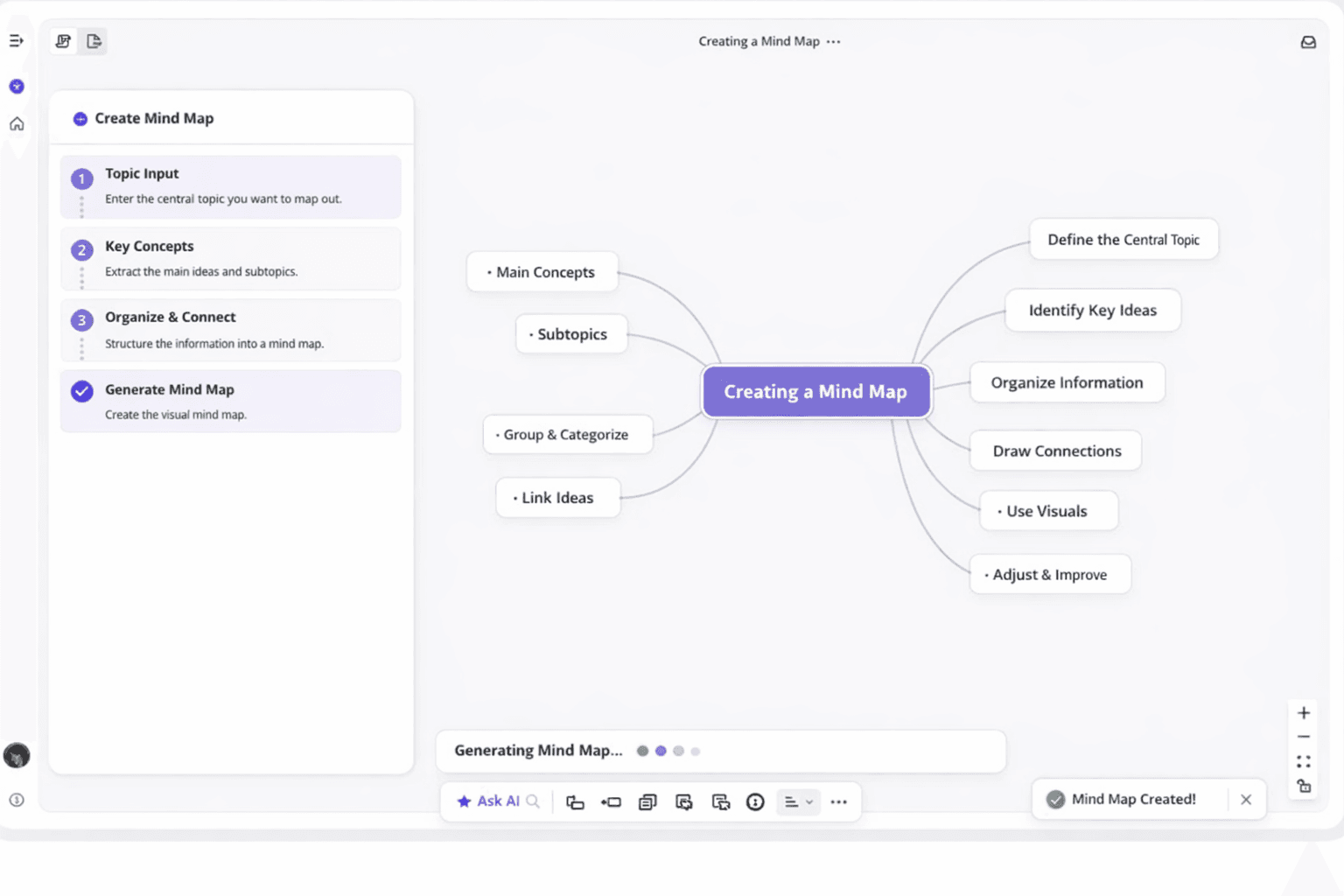
The synthesis process also creates coherent narratives from complex information. Rather than presenting you with raw data dumps, Ponder organizes findings into logical frameworks. It connects concepts across different fields and presents information in ways that support decision-making and further investigation.
Speed matters here too. What might take a research team several weeks to analyze and synthesize, AI agents accomplish in minutes. This acceleration doesn't sacrifice quality—it enhances it by processing more information than any human team could reasonably handle.
Built-In Citation and Validation Framework
Perhaps the most critical difference lies in how AI research agents handle accuracy and credibility. Traditional research requires meticulous manual citation tracking and source validation. Researchers must verify each claim, check original sources, and ensure proper attribution—all time-consuming tasks prone to human error.
Ponder's built-in validation framework automates these essential processes. Every piece of information the system gathers comes with automatic citation generation in multiple scholarly formats. You never need to worry about losing track of sources or formatting references manually.
The validation goes deeper than simple citation management. Ponder cross-references claims against ground truth data to verify accuracy. It applies precision metrics to evaluate source reliability, flagging potential issues before they become problems in your research.
This automated validation maintains scholarly standards while dramatically reducing manual effort. The system checks for consistency across sources, identifies potential biases, and assesses the credibility of each reference. These quality controls happen in real-time as the research progresses.
The framework also helps you understand the strength of evidence behind each finding. Rather than treating all sources equally, Ponder provides context about methodology, sample sizes, and potential limitations. This nuanced approach to validation ensures your research stands up to rigorous scrutiny.
These capabilities create a research experience that's not just faster than traditional methods—it's fundamentally more thorough and reliable. The combination of comprehensive data gathering, intelligent synthesis, and robust validation delivers insights you can trust and act upon.
How Ponder's AI Research Agent Framework Executes In-Depth Research
Every research task Ponder completes uses a carefully orchestrated system. This system handles query processing, analysis, and refinement. The framework transforms your research questions into comprehensive insights through multiple stages of intelligent execution.
Understanding how this pipeline operates helps you leverage its full potential. You can maximize the value of your research needs. The system works efficiently to deliver thorough results.
The execution process combines advanced technology with practical workflow design. Each stage builds on the previous one to deliver thorough and accurate results. Let's explore how Ponder handles your research from initial input to final output.
Query Processing and Execution Pipeline
You submit a research prompt to Ponder. It enters a sophisticated processing pipeline designed to extract maximum value from your request. The system breaks down your query into actionable components that guide the entire research workflow.
The pipeline operates in distinct stages. Each stage is designed to refine and enhance the research process. Think of it as a production line where each station adds value to your research output.
From the moment your input arrives, the system works systematically. It processes information efficiently. The goal is to deliver comprehensive results.
Input Filtering and Constraint Management
Ponder applies intelligent filter mechanisms to your initial prompt. This ensures focused, relevant research. The system identifies key parameters and applies constraint management to eliminate noise and irrelevant information.
Constraint management works by establishing boundaries around your research scope. If you're researching recent developments in a specific field, Ponder automatically filters out outdated sources. The system recognizes temporal, topical, and quality constraints to streamline the entire research process.
This stage also handles ambiguity in your query. The framework uses context analysis to determine the most likely intent. This intelligent processing saves time and reduces the need for manual clarification.
Vector Database and Retrieval Systems
At the heart of Ponder's search capabilities lies a powerful vector database. It enables semantic understanding beyond simple keyword matching. The system converts your query into mathematical representations that capture meaning and context.
This approach finds relevant information even when sources use different terminology. The retrieval system searches through vast information repositories using these vector representations. It identifies documents, papers, and sources that are semantically related to your research needs.
Vector-based retrieval excels at understanding relationships between concepts. If you're researching climate patterns, the database recognizes connections to meteorology, atmospheric science, and environmental studies. This comprehensive approach ensures thorough coverage of your research topic.
Iterative Analysis and Refinement
Ponder doesn't stop after a single search pass. The framework employs an iterative approach where each cycle builds on previous findings. This continuous refinement process ensures that your final results represent truly comprehensive analysis.
The iterative methodology allows Ponder to identify gaps in initial research. It pursues additional avenues to fill those gaps. This self-improving cycle continues until the framework achieves the depth and breadth your research demands.
Generate, Evaluate, and Optimize Cycles
Each iteration follows a clear pattern: generate potential findings, evaluate their relevance and quality, then optimize the approach. During the generate phase, Ponder produces research outputs based on current information. The evaluate phase assesses these outputs against your research objectives and quality standards.
The optimize phase takes lessons from evaluation and adjusts the research strategy. If certain sources prove particularly valuable, the system prioritizes similar sources in subsequent iterations. This adaptive approach means research quality improves with each cycle.
These cycles work automatically in the background. You don't need to manually review each iteration or adjust parameters. The framework handles optimization internally while keeping you informed of progress.
Ground Truth Validation and Precision Metrics
Every iteration undergoes validation against established standards. This ensures accuracy improves consistently. Ground truth validation compares findings against verified sources and known facts.
This process catches potential errors before they propagate through your research. Precision metrics measure how well each iteration meets your research goals. The system tracks relevance scores, source credibility ratings, and coverage completeness.
These metrics provide quantifiable feedback that drives the refinement process forward. The framework concludes the iterative process when precision metrics indicate diminishing returns. You receive results when they're optimized, not just when an arbitrary time limit expires.