
Improve Your Academic Writing with Ponder’s AI-Powered Tools for Researchers and Students
 ·7/28/2026·16 min read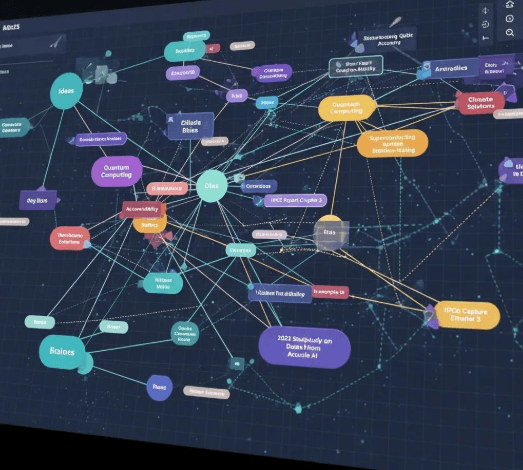
Academic writing demands clarity of argument, rigorous synthesis of evidence, and precise citation management—skills that stretch researchers and students across disciplines. This guide explains how tools like Ponder and structured knowledge management can convert scattered notes and unread articles into coherent arguments, more persuasive drafts, and reproducible literature reviews. You will learn practical workflows for idea generation, semantic literature review, knowledge mapping, and ethical use of AI assistance that preserve academic integrity. The article maps core capabilities to common problems (writer’s block, structure, citation overload), offers step-by-step methods for thesis and literature-review work, and highlights integration points with academic toolchains. Throughout, the focus remains on how to strengthen thinking and argumentation using AI as a thinking partner rather than a ghostwriter, with concrete examples and workflow templates designed for researchers, PhD candidates, and students.
Quick answer: Improving your academic research starts with a systematic workflow, not just better tools. Use Elicit or Semantic Scholar for structured literature discovery. Read deeply with SciSpace or NotebookLM to annotate papers. For synthesis — the hardest step — use Ponder's infinite canvas to visually map how your sources connect, identify gaps, and build your argument before writing. Most researchers who struggle with productivity are missing this visual synthesis layer, not just faster search.
How Does Ponder AI Enhance Academic Writing with AI Assistance?
Ponder AI enhances academic writing by combining interactive AI partnership, automated knowledge extraction, and an infinite visual canvas that structures arguments into retrievable knowledge. This mechanism works because AI-powered multi-document analysis groups related claims and evidence, while an AI thinking partner helps surface blind spots and propose logical flows that improve clarity and coherence. The result is faster synthesis of literature, clearer thesis outlines, and organised knowledge structures that maintain source attribution and reference trails. Below are concise, practical benefits that illustrate how these capabilities translate into better papers and proposals.
Ponder’s toolkit maps well to these outcomes through features that support ingestion, synthesis, and export—turning raw sources into publishable scaffolds that researchers can iterate on quickly and transparently.
Ponder’s core features that align to academic outcomes:
Conversational AI Partner: An interactive agent that helps iterate ideas, test counterarguments, and refine thesis statements.
Knowledge Maps (infinite canvas): Visual canvases that link claims to evidence, making structure and gaps visible.
AI Summarisation and Automated Knowledge Extraction: One-click PDF and web content ingestion that transforms documents into interactive knowledge maps, enabling researchers to organize sources and export findings as structured reports, clean Markdown, or mind maps for further development. This same summarization engine also drives tools like the AI Deposition Summary Mind Map for professionals who need to condense complex transcripts into structured visual overviews.
This combination—interactive reasoning plus structured maps—moves work from fragmented notes to coherent drafts while preserving provenance for citations and follow-up research.
What Features Make Ponder AI an Effective Academic Writing Assistant?
Ponder provides multi-format ingestion, semantic summarisation, and a visual knowledge canvas, that together accelerate drafting and revision. File ingestion accepts PDFs, web pages, and transcripts so you can centralise sources; AI-powered analysis identifies key concepts, relationships, and hierarchies while organizing methodologies and findings into structured representations. The infinite canvas lets you cluster evidence visually, link notes to sources, and export outlines in markdown or mindmap formats for further editing. These features reduce cognitive load and make argument structure explicit, which assists with drafting paragraphs that are evidence-aligned and logically ordered.
A short example illustrates the workflow: upload 10 PDFs, use AI-powered multi-document comparison to identify themes, arguments, and findings across documents, extract key evidence into the canvas, then organize your synthesis into an exportable knowledge map or outline. This sequence demonstrates how features translate into concrete writing steps and improved manuscript structure.
How Does Ponder’s AI Thinking Partnership Support Deeper Insights?
The AI Thinking Partnership combines Ponder Agent with the knowledge canvas to reveal connections and patterns that a manual literature review might overlook. At its core, the Ponder Agent asks diagnostic questions, identifies conceptual overlaps between studies, and proposes chains of abstraction that transform raw findings into interpretive claims. This mechanism supports deeper insight because it reveals knowledge gaps, identifies divergent methodologies and contradictions across sources, and encourages deeper analytical thinking.
For example, a user can ask the agent to use the multi-document comparison feature to analyse how different studies approach similar research questions and receive a synthesized comparison that links to source passages on the canvas. That synthesis then feeds directly into an outline or a draft paragraph, making the thinking-to-writing transition explicit and auditable.
How Can Ponder AI Help Overcome Common Academic Writing Challenges?
Academic writers face recurring problems: organizing vast literature, getting stuck on opening drafts, maintaining academic tone, and managing citations ethically. Ponder addresses these through integrated workflows combining AI-powered analysis with interactive knowledge mapping to reduce friction in every phase of writing. The platform’s approach emphasizes cognitive augmentation—helping writers think more clearly—rather than substituting for original reasoning. Below are three common challenges mapped to concise solutions that show how tools and practice combine to improve outcomes.
Structure Overload: Use mapping workflows to turn scattered notes into hierarchical chapter outlines that show claim–evidence relationships.
Writer’s Block: Use the knowledge canvas to visually structure your arguments and identify gaps that need development.
Citation Overwhelm: Use Ponder's knowledge mapping to organize sources and ensure consistent citation tracking throughout your research.
After adopting these practices, writers typically notice faster drafting cycles and clearer argument progression, which facilitates peer review and supervisor feedback loops.
Intro to the EAV table below: the table maps common academic problems to Ponder features and practical outcomes, illustrating concrete benefits for each challenge.
Problem | Ponder Feature | Practical Outcome |
|---|---|---|
Disorganized literature | Knowledge Maps (infinite canvas) | Clear chapter outlines and linked evidence for each claim |
Slow synthesis |
| Rapid extraction of results, variables, and limitations |
Citation errors |
| Accurate provenance and formatted citation lists |
Drafting delay |
| Focused paragraph starters and revision guidance |
This mapping shows how pairing features with workflows produces measurable improvements in organization and speed. The next section details structuring theses and the knowledge structures that support clear argument development and transparency in your research process.
How Does Ponder AI Assist with Structuring Theses and Dissertations?
Structuring a thesis starts with turning diffuse literature and notes into a skeleton of chapters and sections that map claims to evidence. Ponder supports this by letting you import literature, cluster themes visually, and then build a knowledge map that visually organises claims and links them to supporting sources. Export options let you move outlines into word processors or LaTeX-ready markdown, preserving the structure for iterative drafting and supervisor reviews.
A concise stepwise checklist helps implement this method:
Import core literature and notes.
Cluster themes using semantic grouping.
Create chapter nodes on the knowledge map linking claims to citations.
Export the outline for drafting and version control.
This workflow keeps the thesis coherent, makes revision checkpoints explicit, and speeds up drafting by providing clear blueprints for each chapter.
What Tools Does Ponder Offer for Grammar, Style, and Plagiarism Detection?
Editing academic prose requires balancing clarity, discipline-specific tone, and originality. Ponder’s editing features provide grammar and style suggestions tuned to academic conventions, paraphrasing aids that preserve citation-awareness, and workflows for running originality checks through integrated or exportable processes. The platform emphasizes ethical use—tools assist in clarity and citation, not in producing unattributed content—and it encourages users to document AI assistance when required by institutional policies. This combination helps authors produce polished drafts while keeping provenance and attribution transparent.
Practical usage tips include maintaining a citation-first habit when summarizing sources, running style-pass edits after structural revisions, and using paraphrase suggestions as drafting scaffolds rather than final text. These habits protect originality and align AI assistance with academic integrity expectations.
Intro to the EAV table below: the table compares research-related features to capabilities and outcomes to show how each tool supports literature-review mechanics.
Research Feature | Capability | Outcome |
|---|---|---|
PDF import | Summarize, annotate, link to knowledge map | Faster extraction of evidence and method comparisons |
Semantic clustering | Group related studies by theme | Thematic maps and evidence matrices for synthesis |
Export options | Markdown / Mindmap / Citation lists | Smooth handoff to drafting tools and reference managers |
This table clarifies how individual research features translate into practical, time-saving outcomes. The next H2 explains semantic literature review techniques in detail.
How Does Ponder AI Support Advanced Research and Literature Reviews?
Ponder supports advanced literature reviews through AI-powered multi-source import, cross-source comparison, and exportable structured knowledge maps that researchers can use for systematic or narrative syntheses. AI-powered summarisation extracts key insights, methodologies, and findings while multi-document analysis identifies patterns across sources. The knowledge map then becomes a living evidence base that evolves as new sources are added, enabling cumulative synthesis and reproducible review practices. These capabilities shorten the cycle from discovery to synthesis by making relationships between studies explicit and searchable.
Practically, this process yields interpretable summaries that inform writing, grant applications, and future experiments. Below is a concrete four-step workflow you can apply to run a AI-assisted literature review with reproducible outputs.
Ingest source materials (PDFs, articles, and web pages).
Use AI-powered analysis to group related topics and methods.
Extract key variables and results into evidence nodes on the map.
Export synthesis as a structured knowledge map or draft report for writing.
This structured approach supports transparency, reproducibility, and faster identification of research gaps.
How Can Semantic Literature Reviews Be Conducted Using Ponder AI?
AI-powered literature reviews begin with ingestion and end with exportable syntheses; Ponder’s tools optimise each phase. After importing documents,multi-document analysis group studies by conceptual similarity rather than keyword overlap, enabling a researcher to identify thematic clusters and contradictory findings quickly. The AI identifies key research findings, methodologies, and conclusions into discrete notes linked to source passages. These notes can be arranged into knowledge maps that support research synthesis
A brief example: a researcher studying intervention X imports 50 papers,organizes them into thematic clusters and then produces a synthesis that highlights key patterns and contradictions. This method accelerates the identification of research trends and gaps.
How Does Ponder AI Facilitate Building a Personal Knowledge Base?
Building a personal knowledge base (PKB) requires persistent linking of sources, linked notes , and reusable synthesis that travels across projects. Ponder supports a PKB lifecycle where an insight begins as a seed note, then accrues linked sources and annotations on the knowledge map, and finally becomes a synthesized entry exportable as structured reports, mind maps, or clean Markdown.Tagging and search allow users to retrieve prior syntheses, preventing repeated work and encouraging cumulative scholarship. The canvas functions as both a scratchpad for immediate reasoning and a structured repository for long-term intellectual assets. Beyond academic use, this connection-mapping capability also powers specialized tools like the Legal Case Law Connection Visualizer, which applies the same visual linking logic to map relationships between legal precedents and case outcomes.
Best-practice tips include creating project-level maps, tagging sources by method and quality, and periodically exporting structured knowledge maps for backups and collaborator sharing. These habits preserve provenance and make your PKB a productive research asset.
Intro to the EAV table below: this table compares research tasks to Ponder features and shows concrete outcomes for common literature-review activities.
Research Task | Ponder Capability | Concrete Outcome |
|---|---|---|
Discovery |
| Broader, relevant source retrieval |
Synthesis |
| Concise evidence matrices and thematic maps |
Preservation |
| Reusable, citation-tracked reports |
This comparison highlights how modular capabilities combine to improve literature-review throughput and reproducibility. The next section outlines who benefits most from these tools.
Who Benefits Most from Ponder AI’s Academic Writing Tools?
Ponder’s combination of visual mapping and conversational AI supports a range of academic personas by aligning tools to specific workflows. Researchers and PhD students gain powerful scaffolding for thesis organization and systematic reviews, while undergraduates and coursework writers benefit from structured brainstorming capabilities. Knowledge workers and analysts can synthesize evidence for reports and policy briefs. These use-case descriptions show how features translate into reduced drafting time, clearer arguments, and better-managed citations across skill levels and project scales.
Below are brief vignettes that illustrate tailored workflows for primary beneficiary groups.
Researchers / PhD students: Build project maps that link hypotheses to evidence, enabling iterative synthesis and defendable chapter outlines.
Undergraduates: just deleted text and map-based outlines to convert research notes into structured essays with academic tone support.
Knowledge workers: Assemble evidence matrices and export concise summaries for stakeholder reports or literature briefings. For compliance-focused professionals, Ponder's capabilities extend to the Regulatory Compliance Knowledge Graph Tool, which organizes interconnected regulatory frameworks into navigable knowledge graphs.
These personas underscore that the platform’s value is amplifying domain expertise through structured reasoning and reproducible outputs.
How Do Researchers Use Ponder AI to Streamline Their Workflow?
Researchers use Ponder to compress the research-to-manuscript cycle by combining source ingestion, multi-document analysis, and evidence mapping into a repeatable pipeline. Typical workflows include extracting methodological details across studies, mapping those details onto experimental variables, and synthesizing results into publishable outlines. Collaborative features permit shared canvases for co-authors, and export options let teams hand off drafts to further editing or downstream writing tools. The practical result is clearer manuscript drafts, faster revisions, and better traceability between claims and sources.
Outcomes often include less time spent hunting for citations, more time refining interpretations, and improved readiness for peer review because evidence is organized and auditable within the knowledge map.
How Can Students Improve Essays and Assignments with Ponder AI?
Students can use a compact workflow—topic selection, source ingestion, map-based outlining, outline creation , and revision—to elevate essays from scattered notes to structured arguments. The knowledge map helps organize research findings into structured arguments, while the knowledge map ensures each paragraph is connected to evidence.The platform helps students maintain their voice while organizing evidence to support their arguments. These practices teach students how to build disciplined writing habits that scale from coursework to capstone projects.
Recommended habits include preserving source links on the map, refining your outline as your understanding deepens, and documenting AI assistance per institutional policies to maintain transparency.
What Ethical Considerations Does Ponder AI Address in Academic Writing?
Responsible AI use in academic contexts requires clarity about data handling and how AI contributes to insights. Ponder addresses these considerations by promoting workflows that help organize and connect sources transparently within the knowledge map.Ethical practice emphasizes that researchers remain responsible for their interpretations and conclusions.. Below are specific practices that support responsible AI use in research.
Transparency: Keep records of AI-assisted synthesis and note AI contributions in methods or acknowledgments where appropriate.
Provenance: Use citation exports and linked source passages so every claim traces back to an original source.
User oversight: Verify AI summaries against source text and adjust interpretations based on disciplinary norms.
Adopting these practices reduces the risk of unintentional plagiarism and aligns AI use with institutional guidelines for research conduct.
Intro to the EAV table below: the table summarizes privacy, data handling, and plagiarism-prevention mechanisms and their intended results for academic users.
Entity | Policy/Mechanism | Result |
|---|---|---|
Data handling | Controlled ingestion and provenance linking |
|
AI summaries | User verification requirement |
|
Citation export | Exportable citation lists and annotations |
|
This summary clarifies how technical controls and user practices work together to support ethical research activity. The following subsections provide more detail on privacy and originality safeguards.
How Does Ponder AI Ensure Data Privacy and Ethical AI Use?
Data privacy and ethical use in academic workflows depend on transparent data handling and user control over uploaded materials.Ponder's design emphasizes transparent data organization: uploaded files are linked to extracted notes and maps so researchers can track where information comes from. Users are encouraged to follow institutional guidelines about sensitive data and to avoid sharing confidential datasets without appropriate approvals. The platform supports transparent organization of sources and evidence within the knowledge map.
This organization supports transparency and responsible scholarship through clear source tracking.
How Does Ponder AI Promote Originality and Avoid AI Detection Issues?
Promoting originality combines tool design and user practice: use AI for structuring, summarizing, and clarifying rather than as an unedited content generator. Ponder helps organize sources and maintain connections between notes and original passages, supporting proper attribution. Researchers should run originality checks as part of their final review and explicitly document the nature of AI assistance when required. These steps help avoid unintentional plagiarism and align outputs with academic integrity policies, while preserving the researcher’s interpretive contribution.
A simple checklist before submission helps ensure originality:
Verify AI summaries against source text.
Add citations for paraphrased ideas and direct quotations.
Document AI assistance in methods or acknowledgments when policy requires.
This checklist keeps AI as a cognitive amplifier rather than a substitute for scholarly judgment.
How Can You Integrate Ponder AI into Your Academic Writing Workflow?
Integrating Ponder into everyday research requires a few practical setup steps and consistent habits that organise research materials and enable reuse. Start by organising projects with clear tags and project-level maps to separate literature streams. Establish citation practices when summarising sources, and use export options to move outlines into your preferred editor. Pair Ponder with reference managers forfor citation management, and maintain versioned exports of evidence matrices for lab notebooks or supervisor reviews. These practices make the platform interoperate with existing academic stacks while keeping your research reproducible.
Below are recommended steps for onboarding and maintaining productive workflows that scale from short essays to multi-year dissertations.
Create a project map and import initial core literature.
Tag sources by method, population, and quality.
Organize your findings into thematic clusters using the knowledge map.
Export drafts or outlines to your word processor for further editing.
These steps make Ponder a central workspace for thinking that hands off clean, documented outputs to conventional writing tools.
What Are the Best Practices for Using Ponder AI in Thesis and Dissertation Writing?
Large projects demand incremental synthesis, explicit versioning, and milestone-driven checkpoints. Break your thesis into map-based milestones—literature synthesis, methods write-up, results synthesis, and discussion drafts—and organise each section within the knowledge map. Maintain versioned exports of chapter maps and evidence matrices to capture the evolution of ideas and to prepare for supervisory feedback. Organise your sources and maintain connections between claims and source materials within the knowledge map.
A recommended cadence is to complete cyclical revisions every 4–6 weeks and to export organised knowledge maps before major drafts.
How Does Ponder AI Work with Other Academic Tools and Formats?
Ponder exports to markdown, mindmap formats, and citation lists that can be incorporated into LaTeX workflows or word processors and paired with reference managers such as Zotero or Mendeley. This supports integration with your writing workflow. Recommended pairings include exporting structured outlines to a LaTeX editor and using your reference manager for bibliography generation. Maintaining clear export and import conventions ensures reproducibility and reduces manual formatting work in the final stages of manuscript preparation.
These integration patterns help maintain a traceable research pipeline from discovery to submission, and they make collaborative handoffs smoother between co-authors.
For readers interested in trying these workflows, note that Ponder AI positions itself as an all-in-one knowledge workspace with features such as the Ponder Agent, Knowledge Maps, AI summarization, and multi-source ingestion—tools designed to support the research and writing methods described above. Use these capabilities as examples of how an integrated thinking workspace can reduce friction across the research lifecycle.
For a concise next step: set up a project map, import a small set of core papers, and organize papers into thematic groups to see how arguments and evidence group together—this simple experiment demonstrates the transition from scattered notes to structured synthesis in practice.
The information above outlines practical, ethical, and integrative approaches to using AI-enhanced knowledge work in academic writing. If you want to explore these workflows further, consider experimenting with small, reproducible projects and documenting AI contributions as you go to align with institutional policies and best practices.
Frequently asked questions
How can I improve my academic writing quickly?
Fastest improvements to academic writing quality: (1) Clarity before style — rewrite every sentence to answer "what am I actually saying here?" Unclear writing reflects unclear thinking. (2) One idea per paragraph — split paragraphs containing multiple ideas. (3) Cut unnecessary hedging — "it could be argued that perhaps" weakens claims; state the appropriate confidence level once. (4) Use topic sentences — the first sentence of each paragraph should state its main claim, not just the topic. (5) Get feedback early — feedback on a full draft is harder to act on than feedback on an outline. Tools: Ponder helps with research clarity; Writefull improves academic English style.
What AI tools are best for improving academic writing?
Best AI tools for academic writing: Grammar and style: Writefull (trained on published academic papers — better than Grammarly for academic English; integrates with Word and Overleaf) or Grammarly Premium. Research quality: Ponder (find and synthesize relevant literature to strengthen arguments with well-sourced evidence). Argument feedback: Claude or ChatGPT (ask "what are the weakest parts of this argument?" — use as a critical reader, not a ghostwriter). LaTeX editing: Overleaf + Writefull integration for STEM writing. Important: AI can improve how you say things; improving what you say — the substance and rigor — requires your own thinking.
What are the most common academic writing mistakes to avoid?
Most common academic writing mistakes: (1) Burying the thesis — in academic writing, the main argument should appear in the introduction, not be revealed at the end. (2) Excessive passive voice — active voice is almost always clearer. (3) Citation inflation — citing papers you haven't read, or papers that don't actually support the claim. (4) Hedging overload — pick the right level of confidence and state it clearly and once. (5) Poor paragraph structure — paragraphs without topic sentences, or containing multiple unrelated claims. (6) Ignoring the literature — making claims already well-established or contested without engaging the existing scholarship.
How does Ponder help with academic writing and research?
Ponder contributes to academic writing at the research and synthesis stages before drafting: Literature discovery: search 200M+ academic papers to find sources that should inform your argument. Source understanding: ask questions directly about uploaded papers without reading every word. Cross-source synthesis: ask questions across your entire paper library — "what does the literature say about X?" Research canvas: visually connect ideas from different sources before writing, so the structure of your paper emerges from the structure of the evidence. The result: papers grounded in comprehensive, well-understood evidence. Ponder is not a writing tool — use it before opening your word processor.
What is the difference between academic writing and professional writing?
Academic vs. professional (business) writing: Audience: academic writing addresses specialists with shared domain knowledge; professional writing often addresses mixed audiences including non-specialists. Claim style: academic writing cites evidence for every assertion; professional writing may assert conclusions without detailed evidence chains. Hedging: academic writing acknowledges limitations and alternatives; professional writing tends toward confident recommendations. Citation: academic writing requires formal citations; professional writing typically does not. Structure: academic writing presents evidence then draws conclusions; professional writing typically leads with the recommendation and provides supporting evidence afterward. For academics writing for professional contexts: the biggest adjustment is moving from "here is the complexity" to "here is the recommendation."
See also: AI tools for academic research writing · Research paper writing guide · Streamline your literature review