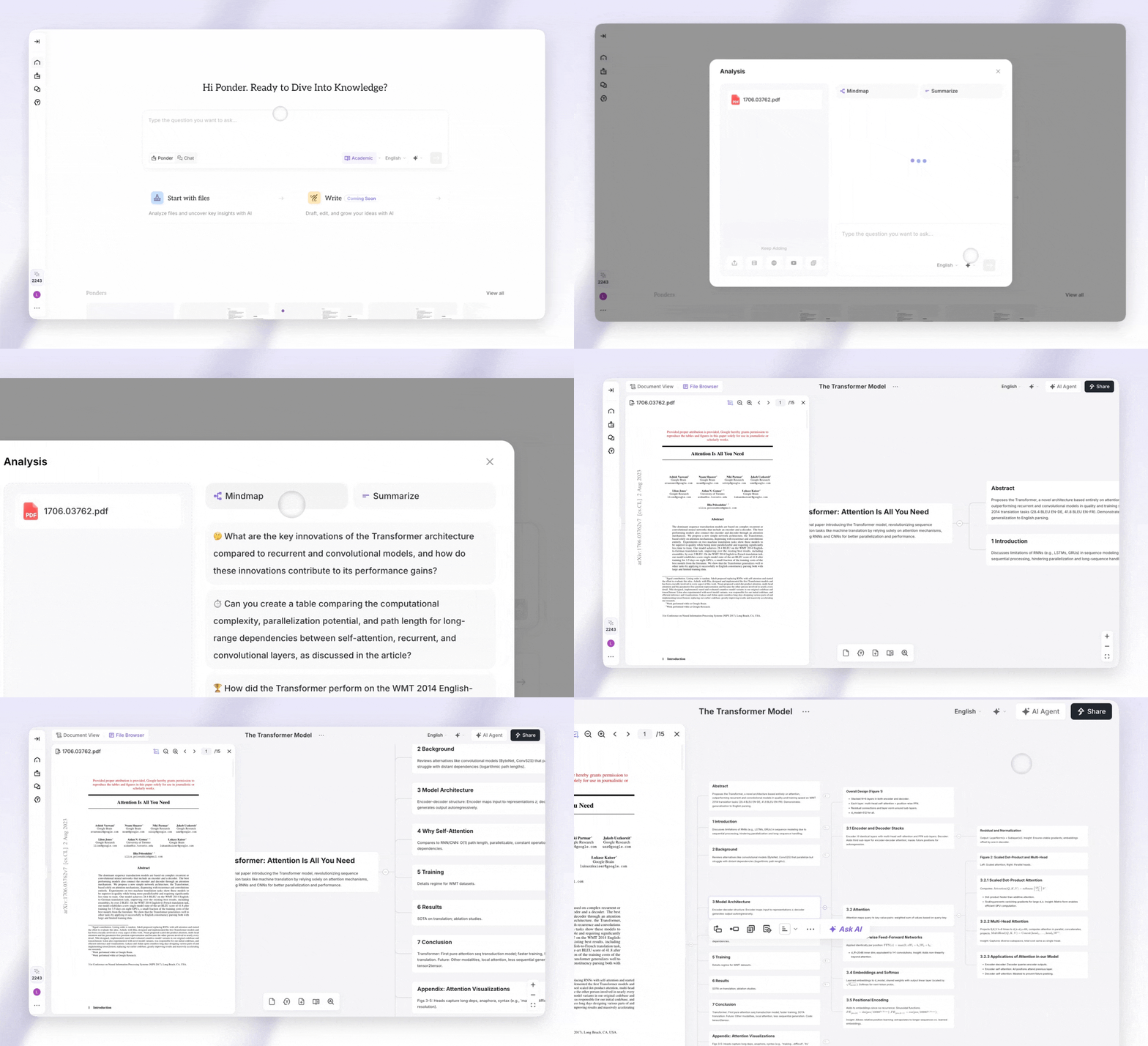
Ponder's ai document analysis platform transforms static files into actionable intelligence. This innovative approach revolutionizes how businesses process information.
Ponder harnesses powerful ai technology, including generative ai and advanced models similar to ChatGPT. It understands, analyze context and extracts meaning automatically. No more endless scrolling through pages.
The platform's intelligent agents work as your digital research assistants. They deliver insights that matter to your workflow. This ai-powered analysis tool doesn't just speed things up—it makes your review process smarter.
Legal professionals, financial analysts, and business managers all benefit from this adaptable ai tool. Say goodbye to manual drudgery and hello to efficiency that transforms your daily operations.
What AI Document Analysis Does for Your Business
Understanding what's inside your documents shouldn't require an army of people or endless hours of tedious reading. AI document analysis changes this reality by doing the heavy lifting for you.
You might be dealing with contracts, invoices, research papers, or customer correspondence. The right technology can extract information quickly and accurately. Instead of manually searching through pages, you get instant access to the data you need.
The real value comes from turning static files into dynamic sources of intelligence. You can analyze hundreds of PDF documents in minutes instead of days. Your entire operation moves faster.
Intelligent Document Information Extraction Powered by AI Models
Modern AI document processing goes far beyond simple text scanning. These systems actually understand context, meaning, and relationships within your files.
The technology recognizes patterns across different formats and layouts. It adapts to various document structures without requiring custom programming for each new type.
This intelligent approach means you spend less time configuring systems. You use the information from documents to make better decisions. The AI learns and improves with each document it processes.
Extract Structured Data from Any Document Type
Different documents contain different types of information. You need a consistent way to capture it all. AI-powered extraction handles this challenge with ease.
Contracts contain dates, parties, terms, and obligations. Financial reports include numbers, trends, and forecasts. Technical manuals feature specifications, procedures, and diagrams.
The system can extract structured data from each document type automatically. Names become contact records. Dates populate calendars, and financial figures flow into spreadsheets.
Consider how this works across your organization:
| Document Type | Data Extracted | Business Impact |
|---|
| Legal Contracts | Parties, dates, obligations, renewal terms, payment schedules | Faster contract review, automated compliance tracking |
| Financial Invoices | Vendor names, amounts, line items, tax details, payment terms | Streamlined accounts payable, reduced processing costs |
| Research Reports | Key findings, methodologies, citations, data tables, conclusions | Rapid literature review, evidence-based decisions |
| Customer Emails | Issues, sentiment, requests, contact info, urgency level | Improved response times, better service quality |
This versatility means one solution handles your entire document ecosystem. You don't need separate tools for each document type.
Accelerate Review of Complex and Long Documents
Long documents present a unique challenge. Reading through a 200-page technical manual or legal brief takes hours. Even experienced professionals struggle with this task.
AI document analysis can accelerate this process dramatically. The system processes pages in seconds. It identifies relevant sections and highlights critical information.
Compliance officers can check hundreds of requirements in a fraction of the usual time. Researchers can quickly find relevant findings across dozens of papers.
The technology doesn't just work faster—it maintains consistency. Human reviewers get tired and miss details. AI maintains the same level of attention throughout every page.
From PDF Documents to Actionable Insights
Most business information lives in PDF documents. These files are great for sharing but challenging for analysis.
AI transforms these static files into sources of actionable intelligence. What used to sit unused in folders becomes valuable input for strategic decisions.
The shift from storage to insight happens automatically. You upload files, and the system immediately begins extracting value.
Summarize Key Points and Identify Key Insights
Reading everything isn't always necessary. Sometimes you just need the highlights.
AI can summarize lengthy documents into concise overviews that capture the essential information. A 50-page market analysis becomes a one-page executive brief.
The real magic happens when the system can identify key insights you might have missed. The AI recognizes patterns and flags unusual data points. It highlights important trends.
The system might notice that complaints about a specific feature increased 300% last quarter. A human reader might miss this pattern across hundreds of individual comments.
These capabilities mean executives get better information faster. Teams make decisions based on complete data analysis rather than partial manual reviews.
Extract Information with Highly Accurate Citations
Accuracy matters for making important decisions. You need to trust that extracted data is correct and verifiable.
Advanced AI systems don't just extract information—they provide highly accurate citations. Every piece of data shows exactly where it came from. Each claim links back to its source location in the original document.
This citation capability serves multiple purposes. Legal teams can verify contract terms by checking the exact clause reference. Finance teams can audit extracted figures by reviewing the source page.
The transparency builds confidence in automated processes. You can instantly verify any extracted data point. You trust the system more completely.
For regulated industries, these citations create an audit trail. You can demonstrate that decisions were based on accurate data from documents. Clear documentation of sources is always available.
This combination of speed, accuracy, and verifiability transforms how modern businesses handle information. Tasks that once required full-time staff now happen automatically. Your team focuses on analysis and strategy rather than data collection.
How Ponder's AI-Powered Document Analysis Works
Ponder's platform uses advanced AI technologies to understand documents like a human expert. The system combines multiple layers of intelligence to transform any document into actionable data. It works like a team of specialists—one reads text, another understands meaning, and others extract what you need.
These technologies work together seamlessly. You don't need to understand the technical details to benefit from them. The platform handles the complexity while you focus on your work.
Optical Character Recognition and Natural Language Processing
Ponder combines OCR and natural language understanding at its core. These technologies work together to read documents and truly comprehend them.
Optical character recognition serves as the system's eyes. It converts images and scanned documents into readable text that computers can process. Ponder's OCR goes far beyond simple text recognition.
Processing Scanned Documents and Extract Text Intelligently
Ponder handles real-world documents that aren't always perfect. The system can extract text with remarkable accuracy. It works with crisp digital files or faded photocopies from decades ago.
The platform uses advanced image processing techniques before OCR begins. It automatically adjusts contrast, corrects skewed angles, and removes background noise. This preprocessing ensures that even challenging scanned documents become readable data.
Natural language processing then understands what the extracted text actually means. It identifies relationships between words and recognizes entities like names and dates. It grasps the context of each sentence.
This dual approach combines OCR with language understanding. It creates a system that thinks about documents the way humans do.
Uses Advanced AI from OpenAI and Custom Models
Ponder uses advanced AI from multiple sources to deliver the best results. The platform integrates cutting-edge models from OpenAI alongside proprietary custom models. These models are trained specifically for document analysis.
Each AI model brings unique strengths to the table. OpenAI's models excel at general language understanding and reasoning. They can answer complex questions and make sophisticated connections across information.
Ponder's custom models are specialists. They've been trained on millions of business documents to recognize specific patterns and formats. These models know exactly what an invoice looks like and how contracts are structured.
The result is a hybrid intelligence system that outperforms any single approach. You get the reasoning power of large language models. You also get the precision of purpose-built extraction tools.
Context-Aware Analysis Across a Range of Document Types
Ponder's intelligence extends beyond individual documents. The platform understands context and adapts its analysis based on what it's reviewing. This context-aware approach makes the system remarkably versatile across different document types.
Ponder knows to look for clauses, obligations, and dates in legal contracts. It automatically focuses on line items, totals, and vendor information in invoices. This intelligent adaptation happens automatically—you don't need to configure anything.
Multi-Document Intelligence with Agentic Workflow Automation
One of Ponder's most powerful features is multi-document intelligence. The system can analyze dozens or hundreds of documents simultaneously. It finds patterns and connections that would take humans days to discover.
This capability relies on agentic workflow automation. Think of agentic AI as having digital assistants that work autonomously on your behalf. These intelligent agents can execute complex analysis workflows without constant supervision.
An agentic workflow might compare all your vendor contracts to identify inconsistent pricing terms. It could cross-reference invoices against purchase orders to flag discrepancies. The agents handle the tedious comparison work while you review their findings.
This automation transforms how teams handle document-heavy processes. Tasks that once required hours of manual review now complete in minutes. The agentic approach also ensures consistency across every document without fatigue or oversight.
Chat with PDF Files Using AI-Powered Chat Interface
Ponder brings a conversational dimension to document analysis through its AI-powered chat interface. Instead of manually searching through pages, you can simply ask questions and get instant answers.
This chat with PDF capability works like having a knowledgeable colleague. Ask "What are the payment terms in this contract?" and the system immediately locates the relevant clauses. Request a summary of key points, and it delivers a concise overview in seconds.
The conversational interface supports natural language queries. You don't need to learn special commands or syntax. Just type your questions as you would ask a person.
This feature is particularly valuable with lengthy or complex documents. Rather than reading through hundreds of pages, you can have a dialogue with your files. The system maintains context throughout the conversation, allowing follow-up questions that build on previous answers.
Extract Key Fields and Specific Information at Scale
Ponder excels at pulling structured data from unstructured documents. The platform can extract key fields like dates, amounts, names, and custom data points. It does this across thousands of documents efficiently.
This extraction happens intelligently. Rather than relying on rigid templates that break when document formats change, Ponder uses AI. The system recognizes an invoice total whether it's labeled "Total," "Amount Due," or "Balance."
Metadata extraction adds another dimension to this capability. Beyond the visible content, Ponder captures information about the documents themselves. This includes creation dates, authors, document types, and relationships between files.
Organizations use this at-scale extraction to digitize archives and automate data entry. They also build searchable document repositories. The time savings are substantial—what once took teams weeks now completes in hours.
| Technology Layer | Primary Function | Key Capability | Business Benefit |
|---|
| OCR Engine | Convert images to text | Processes low-quality scanned documents | Works with any document format |
| Natural Language Processing | Understand meaning and context | Grasps relationships between information | Delivers insights, not just data |
| Hybrid AI Models | Combine general and specialized intelligence | OpenAI plus custom-trained models | Superior accuracy across document types |
| Agentic Automation | Execute complex workflows autonomously | Multi-document analysis without supervision | Scales expertise across unlimited documents |
| API Infrastructure | Enable system integration | Programmatic access to all capabilities | Automates end-to-end document workflows |
All these technologies work together seamlessly in Ponder's architecture. You experience the benefits without managing the complexity. Upload a document, ask your questions, or integrate the API—and let the AI handle the rest.
This layered approach to document intelligence means Ponder keeps improving. As AI models advance, the platform incorporates new capabilities automatically. Your document analysis gets smarter over time without requiring system upgrades or retraining.