

Audio to Mindmap: Turn Meeting Chaos into Crystal Clarity
Our AI transforms your scattered meeting recordings, lectures, and voice notes into organized, visual mind maps—so you never miss a crucial detail again.
Why Ponder
Finally, a way to quiet the noise in your head.
Instantly Tame Information Overload
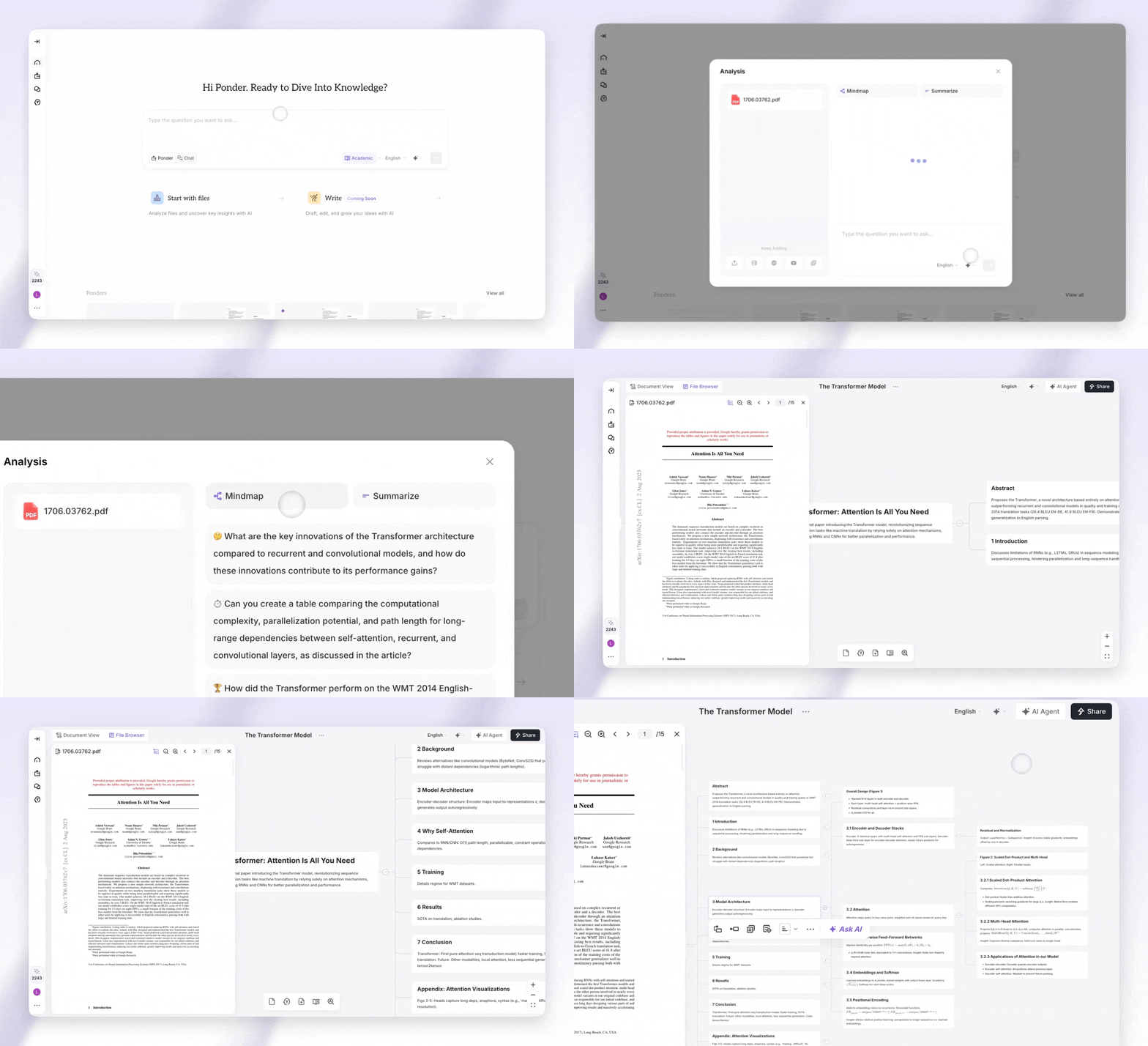
Go from tangled audio to a clear, visual map in one click. Stop feeling like you're drowning in words and start seeing the big picture.
Start PonderingReclaim Your Evenings
Stop re-listening for hours just to find one key point. Our timestamped nodes take you to the exact moment you need, saving you from tedious, soul-crushing review sessions.
Start PonderingRemember Everything That Matters
Visual learning is proven to boost recall. Ensure that brilliant ideas, critical tasks, and important decisions don't slip through the cracks of a tired memory.
Start Pondering

BEFORE & AFTER
Turn Audio Into Visual Ideas
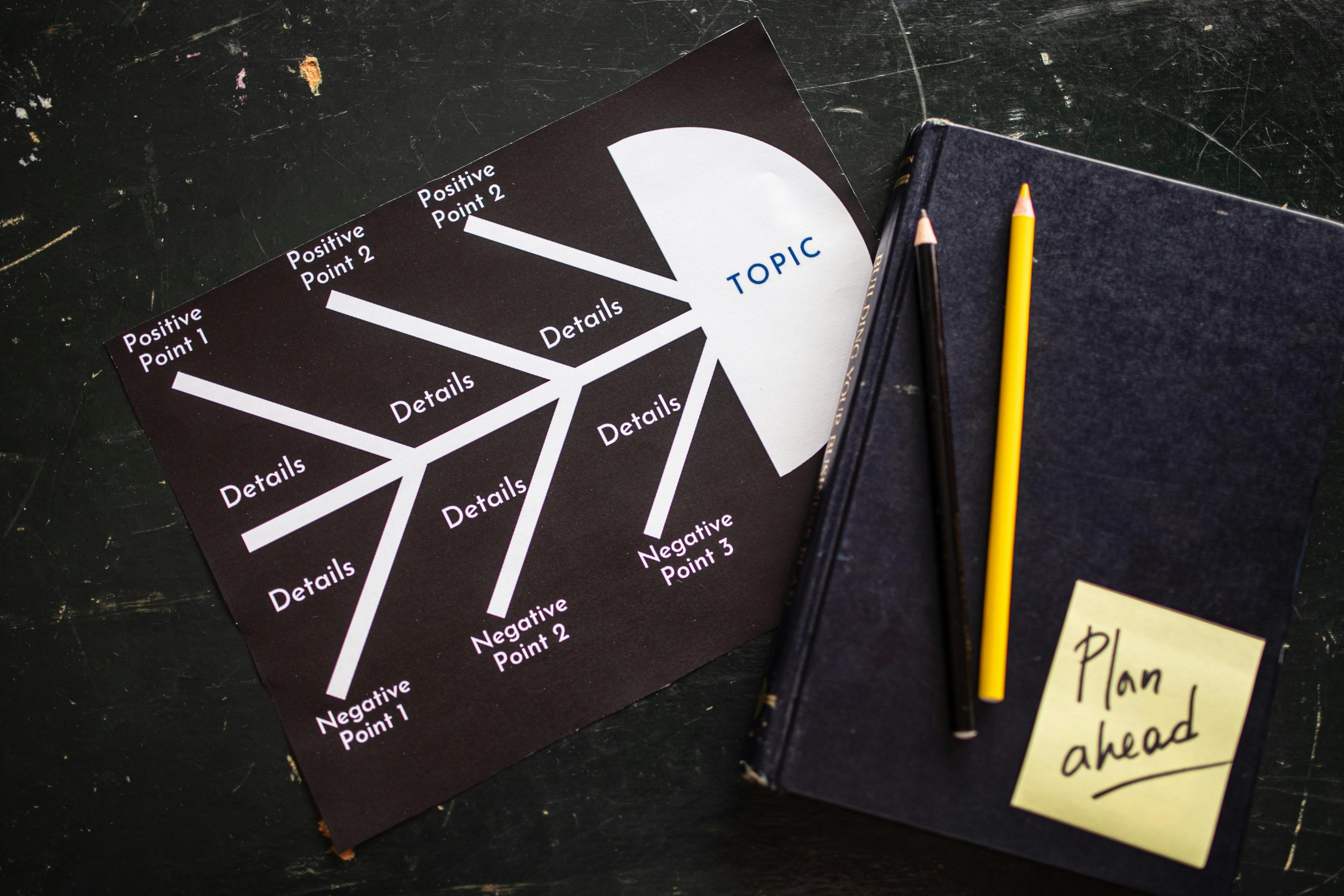
Before Ponder: Audio to Mind Map Without AI
Hours of listening. Pages of notes. You’re replaying lectures, meetings, podcasts, or interviews just to capture key points. Notes are fragmented, important ideas slip by, and organizing everything into a coherent mind map takes more time than the audio itself. The insight is in the audio—but it’s hard to extract.
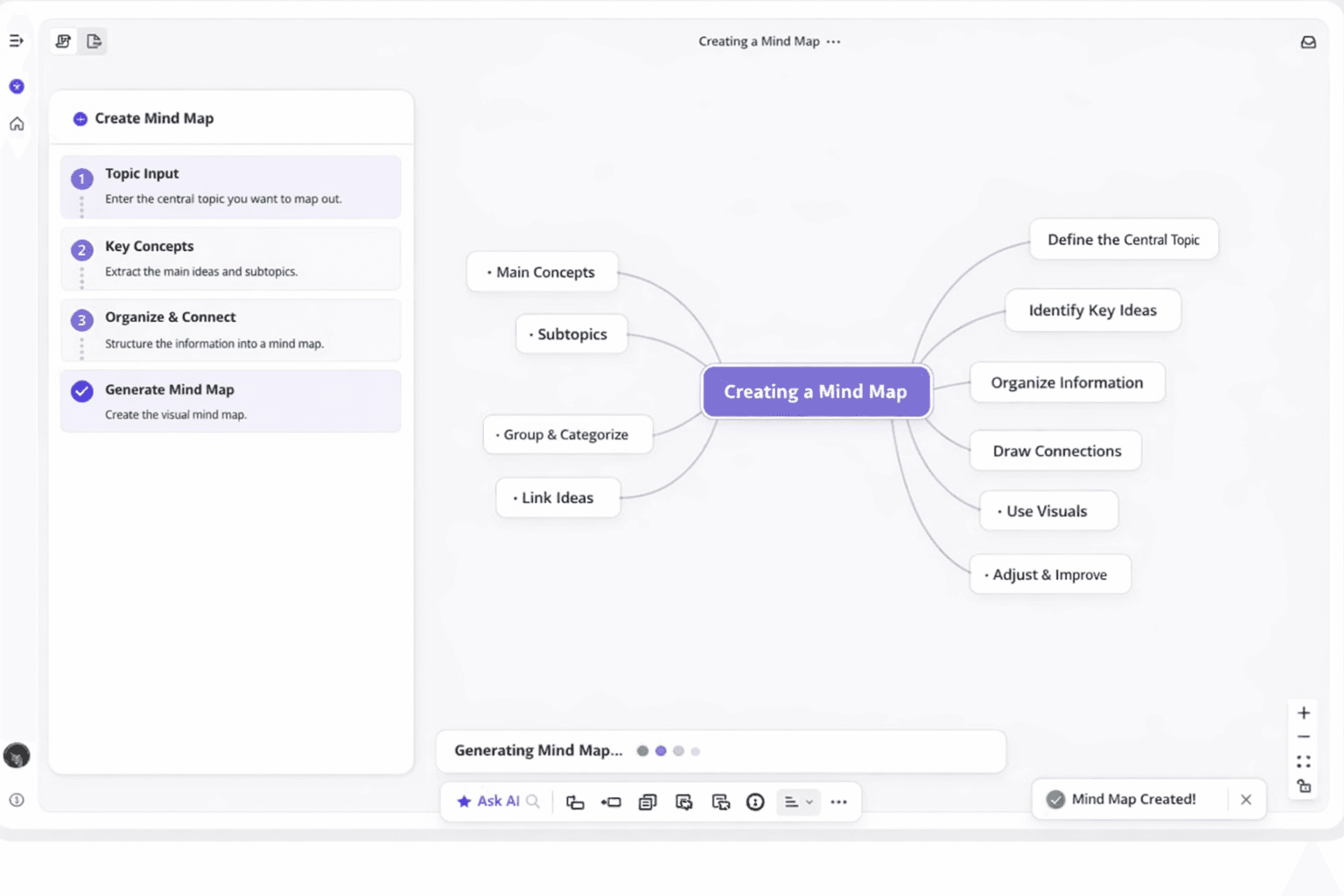
After Ponder: Audio to Mindmap with AI
From voice to visual clarity. Upload or record audio in Ponder. Its AI-powered audio to mindmap feature transcribes, extracts key ideas, and automatically organizes them into a structured mind map. Review conversations at a glance, explore connections between ideas, and refine insights interactively. Instead of listening again, you see understanding instantly.
What Users Say
Trusted by professionals who were tired of the chaos.
"I used to feel like I was drowning after back-to-back meetings. My head was a mess of voices and half-forgotten tasks. Now? I just upload the audio and get this perfect, clear map. It’s not just a tool; it's peace of mind. I feel in control for the first time in years."
Priya P.
Senior Project Manager
Ready to stop drowning and start seeing?
Join thousands who have transformed their workflow!
Do you feel overwhelmed by hours of meeting recordings, lectures, or podcast episodes? You're not alone. Processing spoken information can be exhausting, and traditional note-taking often misses the bigger picture.
Innovative technology steps in to help. By using AI-powered mindmapping tools, you can convert recordings into structured mind maps. Instead of scrolling through lengthy transcripts, you get a clear visual representation of important concepts.
This conversion process works beautifully. First, the system transcribes your audio file into text. Then, intelligent algorithms analyze the content and organize it into a logical structure.
The result? A beautiful mind map that helps you visualize ideas. You can see how different concepts connect with this idea to mindmap tool.
Busy professionals juggling multiple meetings benefit from this approach. Students trying to capture lecture content find it valuable too. You'll spend less time searching through recordings and more time actually understanding what matters most.
Understanding Audio-to-Mindmap Conversion
Have you ever struggled to make sense of hours of recorded audio content? The process of transforming recordings into structured mind maps offers a revolutionary approach. This technology captures and organizes information effectively.
Spoken words carry natural hierarchies and relationships that deserve better treatment than simple linear transcription. Converting audio into a visual framework works with how your brain naturally processes information. Instead of forcing ideas into dense paragraphs, this method creates a spatial template.
You can quickly identify main themes and supporting details. The visual structure highlights connections between concepts clearly.
The Power of Visual Structure
Spoken content flows differently than written text. Speakers weave ideas together through emphasis, pauses, and natural groupings. These nuances often disappear in word-for-word transcription.
Visual mind maps capture what makes spoken communication truly powerful. They organize information into branches that mirror how ideas actually connect. Your brain can process these visual relationships up to 60,000 times faster than text alone.
The framework helps you see the big picture instantly. Main topics sit at the center, while subtopics branch outward in logical groupings. This structure makes it remarkably easy to understand complex discussions without rewinding.
You can customize your visual mind maps to match your thinking style. Add colors to categorize themes or adjust branch positions to show priority. Expand specific sections for deeper detail.
The Limitations of Traditional Methods
Manual note-taking creates several frustrating challenges that slow down your productivity. You're trying to listen, understand, and write simultaneously. This juggling act guarantees you'll miss important details.
Traditional methods force you to capture information in real-time. You have to transcript the audio into text, and then turn text to mindmap. By the time you finish writing one point, the speaker has moved on. This constant pressure makes it nearly impossible to organize thoughts as they happen.
Reviewing traditional notes later becomes difficult. Linear text doesn't show you how ideas connect or which points deserve attention. You end up reading everything again just to identify key takeaways.
| Aspect | Traditional Note-Taking | Audio-to-Mindmap Conversion |
|---|---|---|
| Processing Time | Manual transcription requires 4-6 hours per audio hour | Automated processing completes in 5-10 minutes per audio hour |
| Information Structure | Linear text format with limited visual hierarchy | Branching visual framework showing clear relationships |
| Review Efficiency | Must read entire document to find specific information | Navigate directly to relevant branches and topics instantly |
| Capture Accuracy | Missed details common due to simultaneous listening and writing | Complete audio content captured with AI-powered identification of key themes |
The comparison reveals why so many professionals feel frustrated with traditional approaches. You need an efficient system that respects both the richness of spoken communication and your time. Converting recordings into structured mind maps solves these challenges by doing the heavy lifting for you.
How Audio to Mindmap Technology Works
Transforming spoken words into organized visual structures involves three simple stages. The audio to mind map conversion process breaks down complex information. Each phase builds upon the previous one to create a comprehensive visual representation.
You don't need technical expertise to understand how this works. The system handles the heavy lifting while you focus on results. Let's explore each step so you know what happens from start to finish.
Upload and Transcribe Your Audio File
The first stage begins when you select your audio file from your device. Most platforms offer a simple drag-and-drop interface or browse button. Once uploaded, the system immediately converts speech into text through advanced transcription technology.
This initial phase is completely automated, requiring no manual intervention. The software listens to your audio and creates a written version. This transcription becomes the foundation for building your mind map structure.
Supported Formats and Duration Limits
Modern ai audio to mind map tools accept a wide variety of file types. The most common format is mp3, but platforms also support WAV, M4A, AAC, and FLAC. This flexibility means you can use recordings from virtually any device or application.
Duration limits vary depending on the service you choose. Many platforms handle files ranging from short 5-minute recordings to lengthy 2-hour sessions. Some premium services offer extended duration support for conferences or full-day workshops.
| File Format | Compatibility | Typical Duration Limit | Best Use Case |
|---|---|---|---|
| MP3 | Universal support | Up to 2 hours | General recordings, podcasts |
| WAV | High-quality audio | Up to 90 minutes | Professional recordings, interviews |
| M4A | Apple devices | Up to 2 hours | iPhone recordings, voice memos |
| AAC | Compressed format | Up to 2 hours | Mobile recordings, webinars |
Handling Background Noise and Audio Quality
Not every recording captures clear audio in perfect conditions. Background noise from traffic, conversations, or equipment can affect file quality. Modern systems use sophisticated filtering to minimize these distractions during transcription.
The technology adapts to different audio quality levels remarkably well. Even recordings with moderate background interference can achieve high transcription accuracy. Advanced algorithms distinguish between primary speech and ambient sounds.
For best results, recordings with minimal echo and consistent volume work best. However, the system doesn't require studio-quality files. Most everyday recordings from smartphones or laptops work perfectly for conversion to audio into mind maps.
AI Processing and Content Organization
Once your audio is processed and transcribed, the real magic begins. Artificial intelligence analyzes the text to understand context, meaning, and relationships between ideas. This stage transforms linear transcription into structured knowledge.
The AI doesn't just read words—it comprehends concepts. It recognizes when speakers introduce new topics, provide supporting details, or revisit earlier points. This intelligent analysis forms the basis for creating your visual map.
Identifying Key Topics and Branches
The system scans through your transcription looking for main themes and subject areas. It identifies transitions between topics and recognizes core concepts versus supporting information. Think of it as having an expert note-taker who instinctively knows what matters most.
These key topics become the primary branches of your mind map. The AI groups related information together naturally. It spots connections you might miss when listening in real-time.
Each branch represents a distinct theme or idea cluster from your audio. The technology determines logical groupings based on semantic relationships. This automated organization saves hours of manual sorting and categorization.
Automatically Generate Hierarchical Structure
After identifying topics, the system builds a hierarchy that reflects information importance. Main ideas occupy central positions, while details and examples branch outward. The AI can automatically generate multiple levels of structure based on content complexity.
This hierarchical arrangement mirrors how human memory naturally organizes information. Primary concepts anchor the map, with supporting points radiating outward in logical patterns. The technology determines appropriate nesting levels for each piece of information.
The resulting structure shows clear relationships between concepts at a glance. You can see which ideas connect to each other. This visual hierarchy makes complex audio content immediately understandable.
Customize Your Visual Mind Map
The automatically generated map provides an excellent starting point. Customization capabilities let you refine and personalize the structure to match your needs. You can reorganize branches by dragging them to different positions.
Add new nodes manually to capture insights that occurred while reviewing. Delete or merge sections that don't serve your purpose. Color-coding options help you visually distinguish between different types of information.
Adjust text sizes to emphasize certain concepts over others. Add icons, images, or annotations to enhance understanding and memory retention. Many platforms allow you to change the overall layout style.
Choose from traditional radial maps to horizontal flowcharts or vertical hierarchies. This flexibility ensures your final audio to mind map perfectly suits your intended application. Use it for study guides, project planning, or content analysis.
The combination of automated intelligence and human customization creates the ideal balance. You benefit from rapid AI processing while maintaining complete creative control. The final visual representation is entirely yours.
Practical Applications and Benefits for Audio to Mindmap
Turn hours of recorded content into organized visual insights in just minutes. This tool transforms how you handle spoken information across different tasks. The real value shows when it fits seamlessly into your daily workflow.
People across different industries are discovering new ways to work smarter. The technology adapts to your specific needs. It makes capturing knowledge and sharing it easier.
Convert Meeting Recordings into Actionable Insights
Business meetings often generate mountains of information that disappear into forgotten audio files. Traditional recordings sit unwatched in digital folders. No one has time to listen through entire sessions again.
Converting these recordings into visual mind maps changes everything. Your meeting becomes a clear visual summary. Decisions appear in one branch, action items in another.
Discussion points organize themselves logically. Team members can quickly see who's responsible for what. No need to scroll through lengthy notes.
This approach saves countless hours each week. Instead of asking about budget decisions, you look at your mind map and find the answer instantly. Follow-up tasks become clear, deadlines stay visible.
Transform Lectures and Educational Content
Students and educators face a common challenge—capturing complex information during lectures. Handwritten notes often miss key connections between concepts. Recorded lectures require time-consuming re-listening sessions.
Audio-to-mindmap technology revolutionizes how learners process educational content. A two-hour lecture becomes a structured visual guide. Main concepts branch out to supporting details.
You can customize the structure to match your learning style. Review sessions become dramatically more efficient. Students can identify knowledge gaps at a glance.
The visual format helps memory retention. The brain naturally remembers spatial relationships better than linear text. Focus study time where it matters most.
Teachers benefit too. They can share mind maps with students who missed class. The format works beautifully for creating study guides.
Organize Podcasts, Interviews, and Brainstorming Sessions
Creative professionals and researchers deal with different audio content daily. Podcasts contain valuable insights buried in casual conversations. Interview recordings hold nuggets of wisdom that take forever to locate.
Converting this content into mind maps creates a searchable knowledge base. Each recording becomes a visual reference guide. The structure makes finding specific topics simple.
Extract Key Ideas from Conversations
Long conversation recordings don't need to be time-consuming anymore. Audio-to-mindmap tools automatically extract the most valuable concepts. They organize them hierarchically with main themes as primary branches.
You can quickly refine the output to focus on what matters most. Want to expand on a particular idea? Click that branch and add your own thoughts.
Need to organize podcast insights by topic rather than chronologically? Rearrange the branches to suit your needs. This flexibility transforms static recordings into dynamic resources.
Create Interactive Presentations
Mind maps generated from audio don't just help you—they become powerful sharing tools. Your brainstorming session transforms into an interactive presentation. The visual format engages audiences far better than bullet-point slides.
Teams can collaborate by adding their own branches and comments. Students can generate study presentations to share with classmates. Researchers can create visual summaries of interview findings.
The interactive nature means viewers can dive deep into topics that interest them. They can also stay at the overview level. You customize how much detail to show based on audience needs.
| Use Case | Audio Input | Mind Map Output | Primary Benefit |
|---|---|---|---|
| Business Meetings | 60-minute team discussion | Action items, decisions, responsibilities organized by topic | Instant clarity on next steps and accountability |
| Academic Lectures | 90-minute class recording | Hierarchical concept map with main ideas and supporting details | Efficient review and improved retention for exams |
| Podcast Episodes | 45-minute interview | Key insights organized by theme with timestamps | Quick reference without re-listening to entire episode |
| Brainstorming Sessions | 30-minute creative discussion | Ideas grouped by category with connections highlighted | Visual collaboration tool for team development |
The versatility of audio-to-mindmap conversion means you'll discover new applications. Each recording type brings unique benefits. They all make your audio content infinitely more useful and accessible.
FAQ
Your Questions, Answered
Your Clearest Thinking is One Click Away.
Stop letting valuable insights get lost in a sea of audio. Start turning your conversations into actionable knowledge today.